
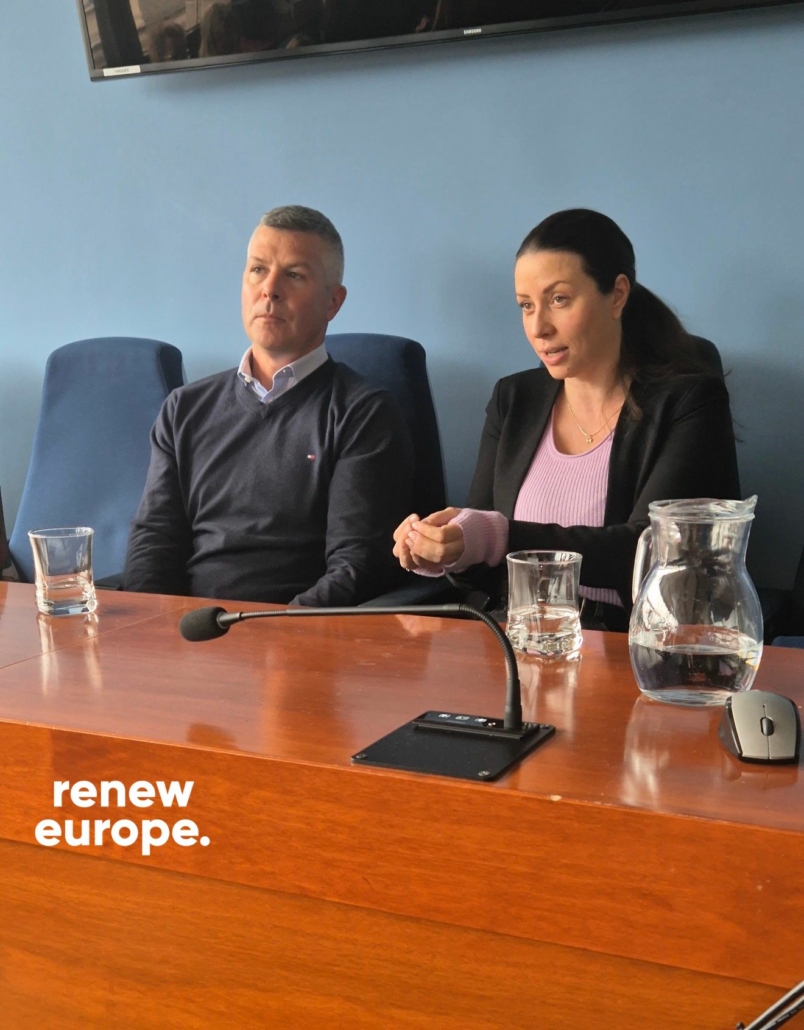
On Wednesday, April 1, 2026, MEP Irena Joveva visited the Faculty of Arts of the University of Ljubljana, where she participated in a round table discussion as part of the course Education for Democratic Citizenship. She discussed the work of MEPs with students of pedagogy and andragogy, and also touched on the common foreign and security policy and the dynamics between the European Union and Slovenia. “The disintegration of the European Union from within is even more dangerous than external threats; unfortunately, authoritarianism is increasing, although there are also bright exceptions,” Joveva emphasized regarding the threat to the future of the Union.
In her introduction, Joveva stressed that she perceives her current mandate as even more unpredictable than her first. Although the latter was heavily marked by the Covid-19 pandemic, the current mandate is, in her opinion, even more challenging, as it is shaped by the intertwining of numerous global crises, from the war in Ukraine and the situation in Gaza to the increasingly unpredictable and dangerous policies of US President Donald Trump. She also warned of the strengthening of the far right and stressed that the traditional division between left and right is increasingly being replaced by a split between pro-European and Eurosceptic forces within parliament.
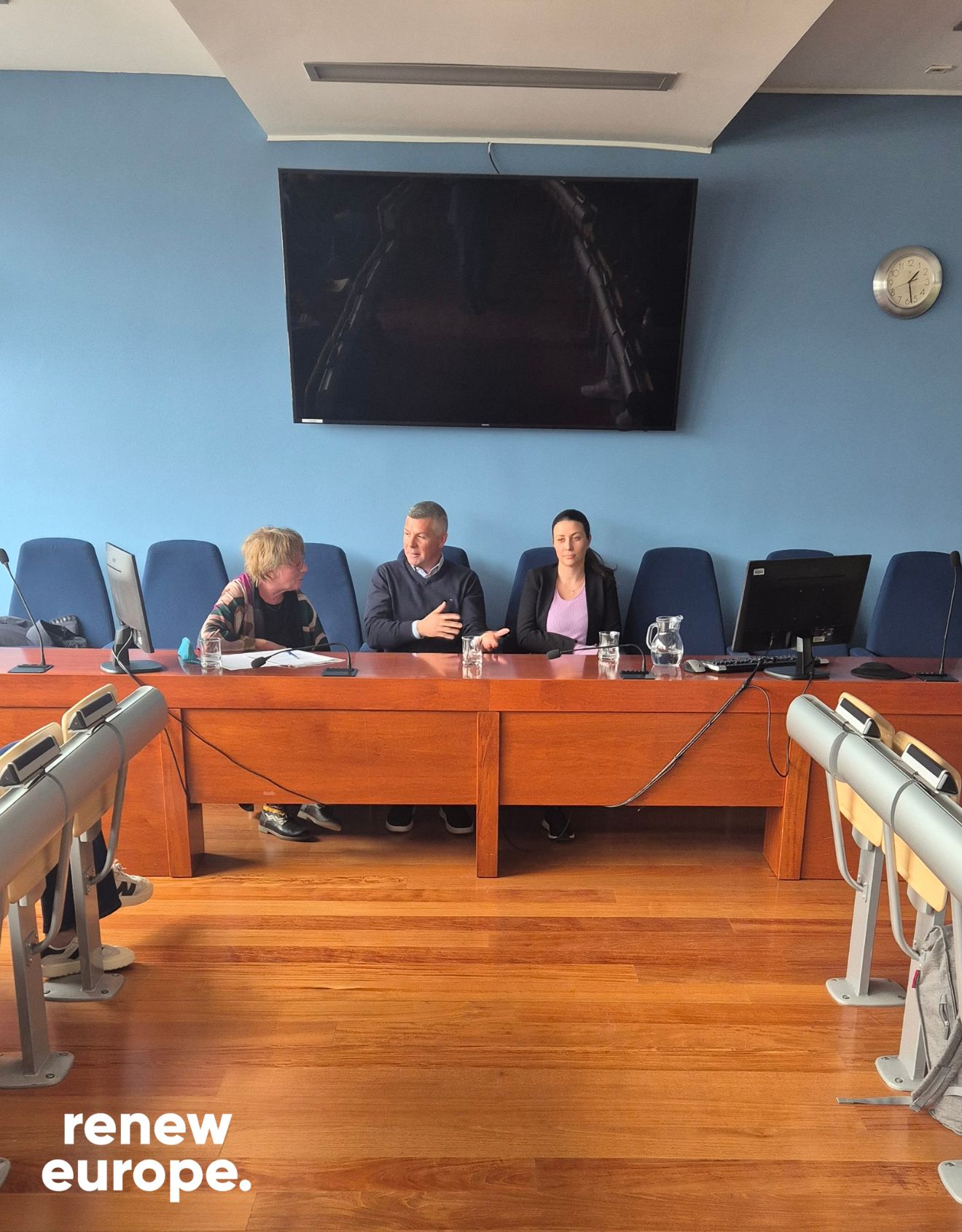
She further explained to the students the diversity within her political group, Renew Europe, where some MEPs focus more on economic issues, while others, including herself, focus on social rights and equality. Despite their differences, they are united by common values, with human rights and the rule of law as the foundation. “Of course, the group coordinates before votes, but in the end I always vote according to my conscience,” she emphasized, adding that her beliefs largely coincide with the views of the group of which she is vice-chair.
The conversation also touched on the aspirations for national sovereignty and the desire for a strong, united Europe. Joveva assessed that strong states are not necessarily in contradiction with a strong European Union, but she also pointed out the duplicity of some sovereignists who, on the one hand, block key legislation, and on the other, willingly collect European funds.
“I call them self-proclaimed patriots. The disintegration of the European Union from within is even more dangerous than external threats, unfortunately there is more and more authoritarianism, although there are bright exceptions. It is absolutely possible to combine sovereignty and at the same time be aware of common standards. I believe that we urgently need reform, especially in the field of security and foreign policy. The rules that we have now, including the veto, are being exploited by some leaders for their own, personal interests.”
When asked whether we can still talk about a common European foreign and security policy of the Union in times of numerous regional conflicts, she gave a critical answer, especially regarding the lack of credibility in responding to international crises. “I don’t even know anymore whether these are double, triple standards, or whether we can even call these standards,” and cited as an example that the European Union correctly sided with the victim in the case of Ukraine, but did not do so again in the case of Gaza. She also expressed her belief that Israeli Prime Minister Netanyahu should be treated according to the same criteria as Russian President Putin.
In the final part of the debate, which was also attended by MEP Matjaž Nemec, Joveva presented her view on the role of Slovenia and emphasized that the influence of the country should not depend on its size, but on the self-confidence and proactivity of its leadership in asserting its own positions. “We are a small country, but this smallness is mainly in our heads. I don’t notice it and I am proud to be Slovenian. We have great credibility in the European Union and are perceived very positively,” she concluded.


Leave a Reply
Want to join the discussion?Feel free to contribute!