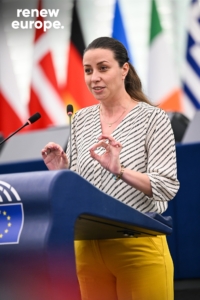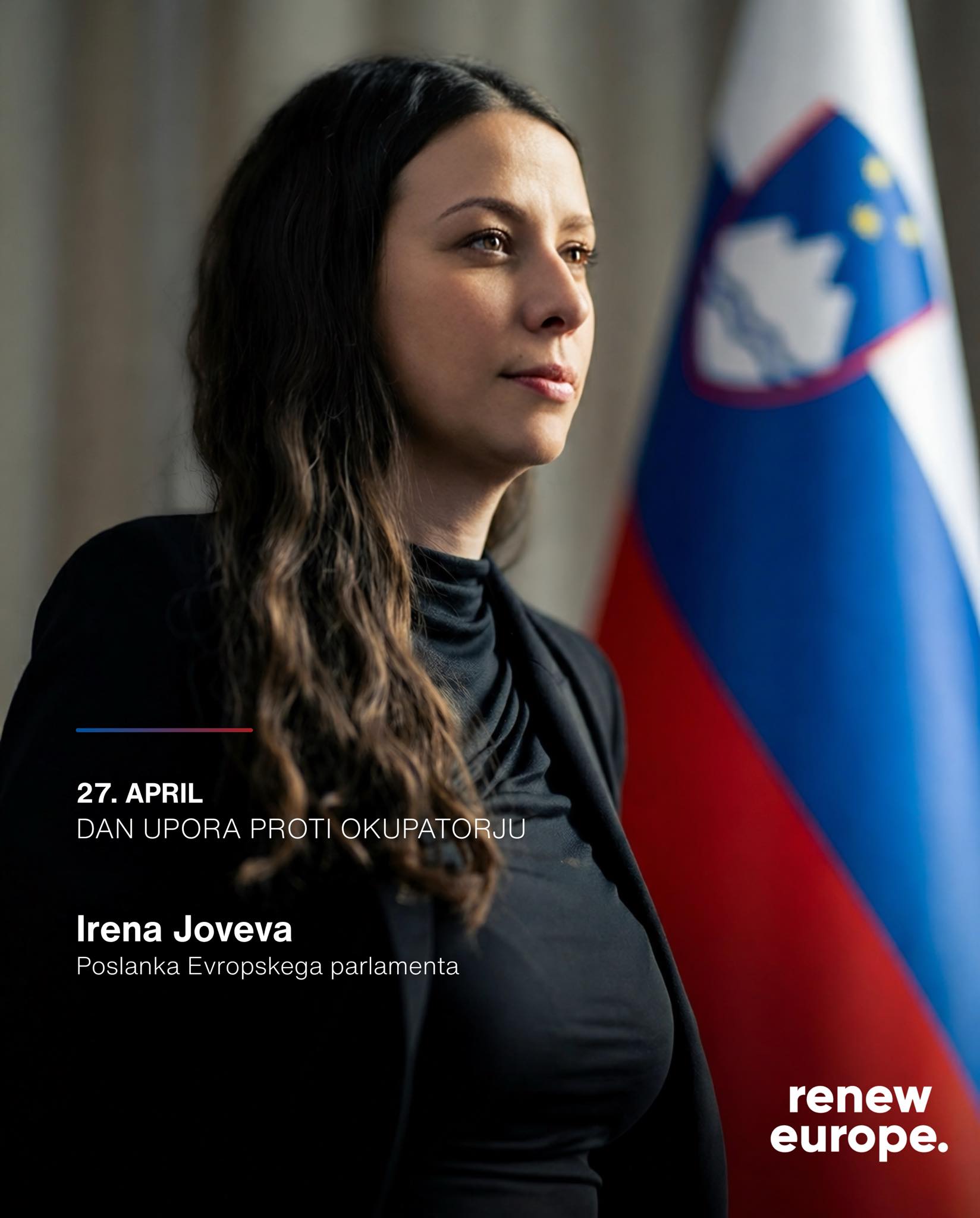
On Monday, 27 April 2026, MEP Irena Joveva took part in a plenary debate on the importance of non-consensual rape legislation in the European Union, where she stressed that the concept of consent should be understood simply – ‘yes’ or ‘no’.

In her introduction, the MEP highlighted the Istanbul Convention, which clearly states that rape is any sexual act without free and explicit consent, which has been signed by all Member States but has still not been uniformly transposed into national criminal law.

She pointed out that this is primarily a question of political will and was critical of countries that support the convention on a declarative level but do not put its principles into practice:

“The will of those who have clearly forgotten that without a clear yes – there is nothing. That silence is not consent. That fear is not consent. And that the inability to say ‘no’ in no way means ‘yes’.”

In conclusion, Joveva stated that, in her opinion, the decision should not be a matter of complicated legal debates, but rather a clear choice between protecting victims or not protecting them.

Earth Day. Today.

This year with a very clear theme: Our Power, Our Planet.

And now I could stick to the nice words about nature and responsibility. Or I could say: isn’t this photo beautiful?

Unfortunately, reality is a little less romantic. The problem is not that we don’t know what is right. The problem is that we too often know. But…

But: in the EU we have more tools today than ever before. Concrete legislative frameworks to reduce emissions, protect nature and people, industrial responsibility, transform the economy…

We are no longer discussing whether we need rules. We are now discussing how many more we are prepared to keep.

Here are the famous “omnibus” packages. With one, for example, we are interfering with two key pieces of legislation on corporate reporting and their responsibility. In the name of simplification, we are getting fewer obligations and more flexibility.

Or better said: less pressure for the most influential. We have similar things at home – “intervention plans”: more for the rich, but for the remaining 99%… who cares, or what?

For many, compromises and coordination are no longer just a thing. It’s cheap populism. It’s because it’s clearly fashionable to be a hypocrite these days.

Like modern cheap products without any serious control over what they contain. Our market is flooded with eternal chemicals – substances that we have long known have no place in our environment.

(By the way: if you draw parallels with real people instead of products and substances – nothing wrong)

They even managed to water down one of the key European laws for forest protection. Even where we know that the consequences are direct and measurable, we are therefore willing to take a step back.

And then we ask ourselves why people are losing trust.

Part of the answer is also that space is increasingly opening up to policies that offer simple answers to complex problems.

To those who present responsible politics as something we “cannot afford anymore”. In reality, it is the opposite. We cannot afford not to have it.

At least environmental politics is not an ideological issue. Air and water are not abstract topics! That is why “Our Power, Our Planet” should not remain a slogan. The power exists. The only question is who uses it and how.

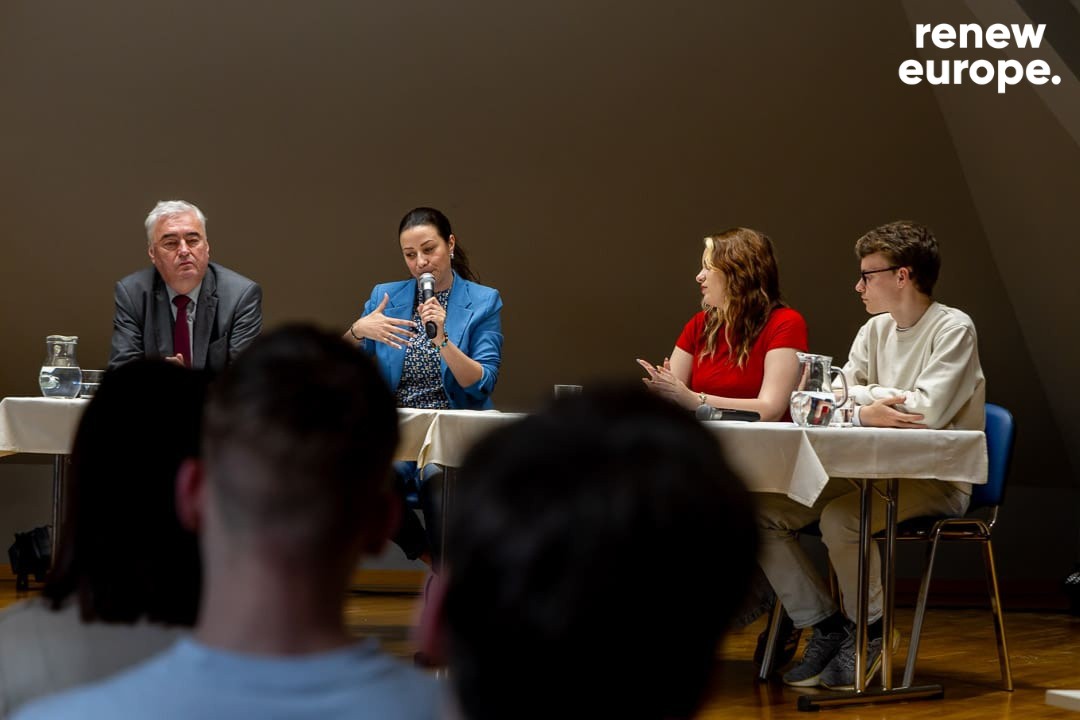
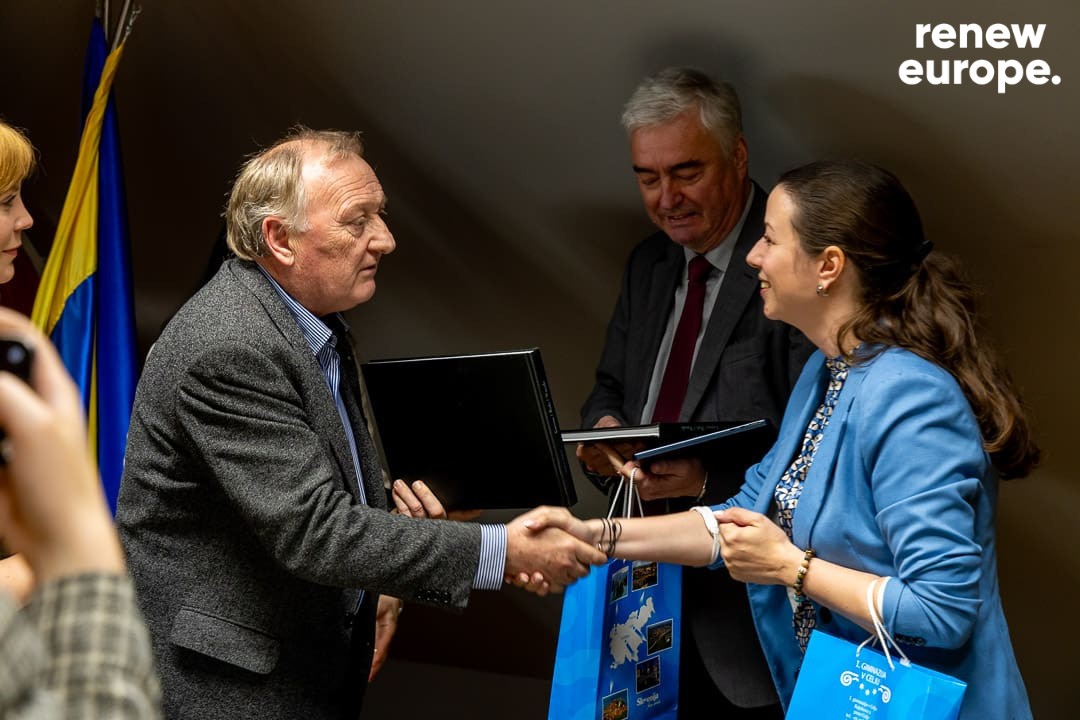
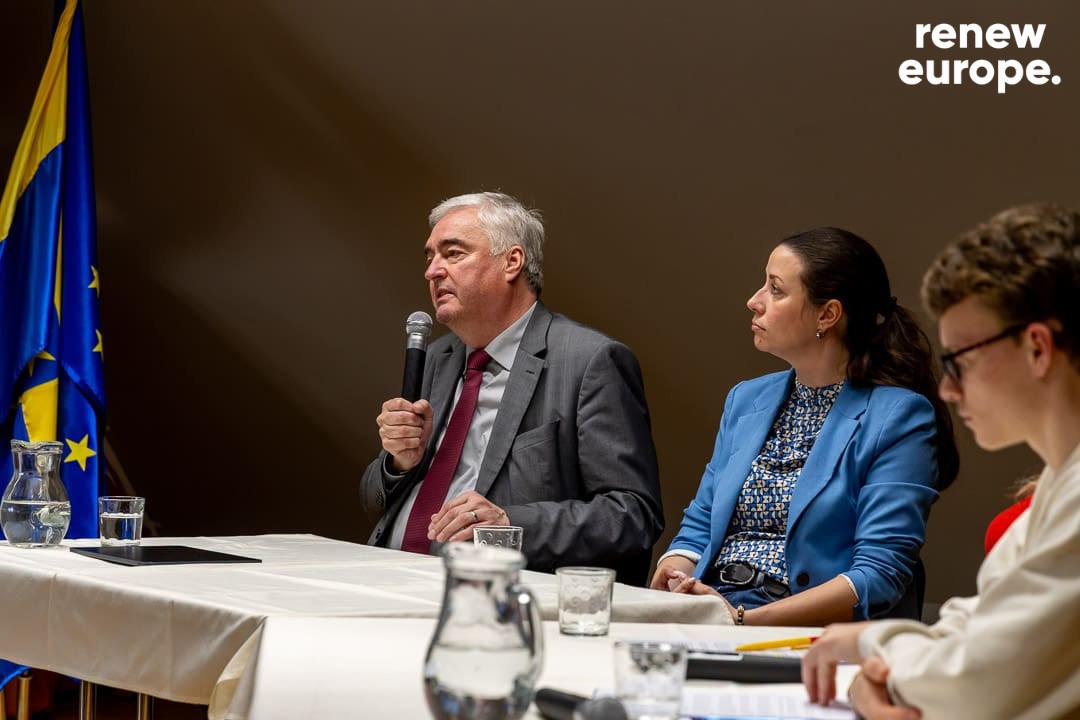
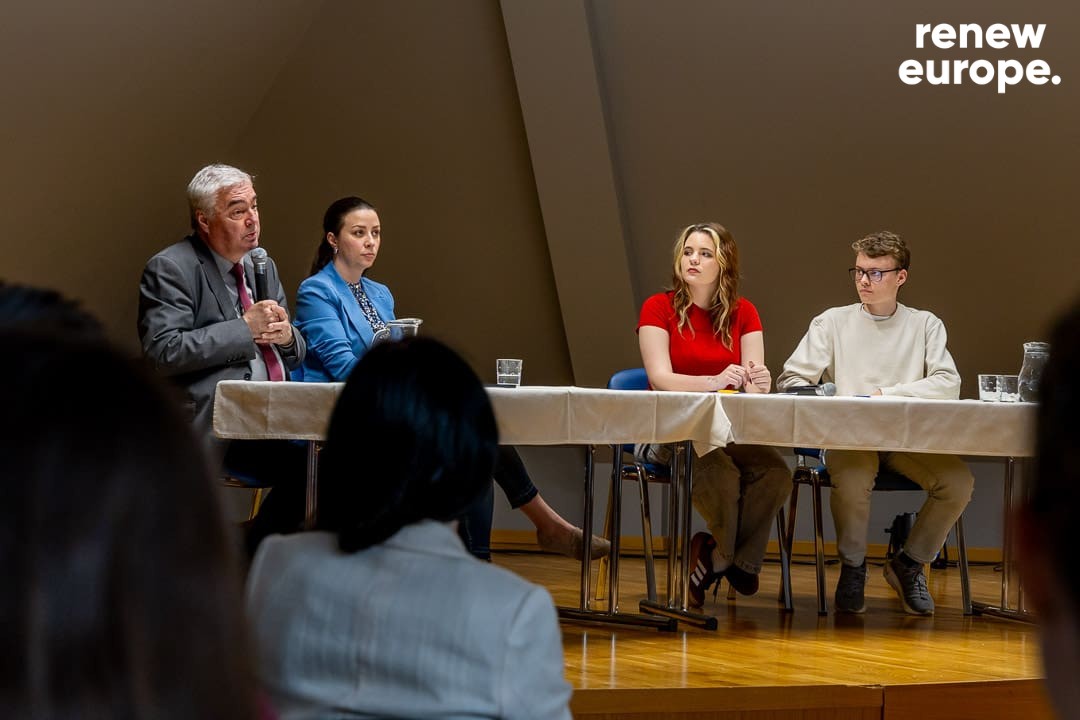
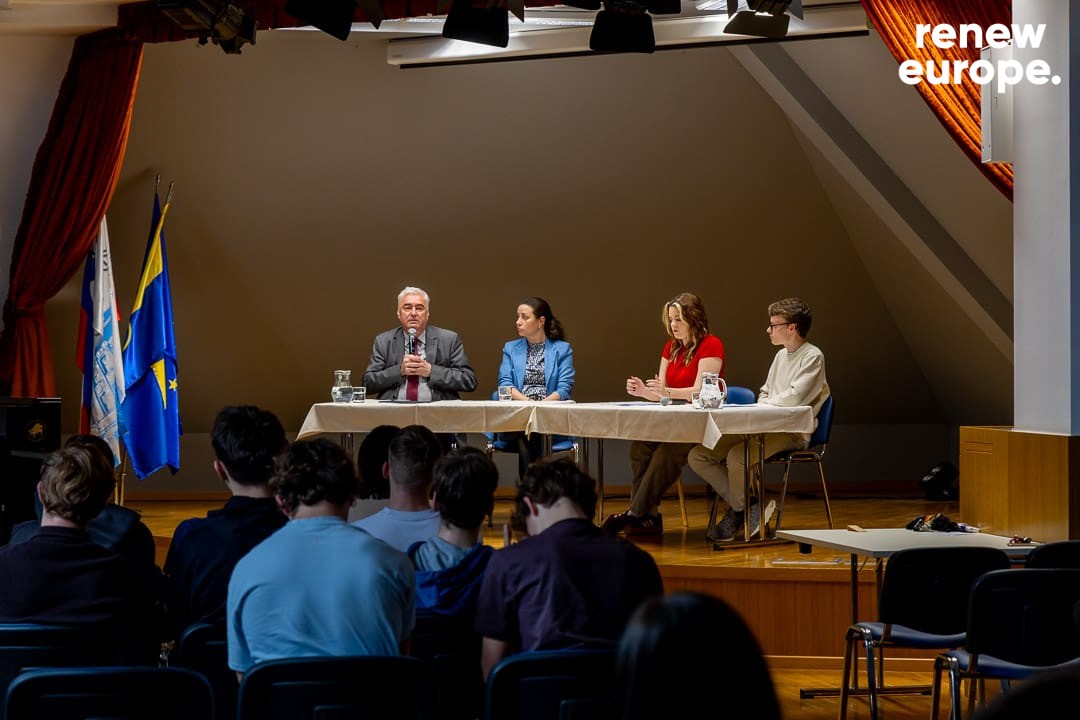
On Friday, April 17, 2026, MEP Irena Joveva attended a round table at the I. Gymnasium in Celje and spoke openly with students about her study and career path and the challenges she faces in politics. She emphasized that studying international relations was not her first choice, but it later turned out to be the right decision. She also told young people that not everything in life has to go according to plan, as unexpected paths can turn out to be the best.

She pointed out that her studies had given her a breadth of thinking and an understanding of global events, as well as the awareness that the individual is not always at the center of everything. She highlighted humanity as a key value, which in her opinion remains the most important also in politics.

She also presented her work at the European level to the students, where she had participated in important legislative changes, including in the areas of digitalization, artificial intelligence, personal data protection and media legislation. She stressed the importance of perseverance, as decision-making processes are often lengthy, but can nevertheless bring about positive changes:

“Not all politicians are the same. There are also those of us who care about what we were elected to do. If I didn’t believe in it, I wouldn’t be in it, but it’s not always the easiest thing to believe in positive change.”

She also touched on the position of women in politics and society, where, in her opinion, differences in treatment still exist. She emphasized that motherhood and career are not mutually exclusive, although balancing the two roles is not easy, and she wants to be an example that it is possible to successfully combine the two.

The MEP spoke about the challenges faced by young people in the labour market, especially the difficulties in gaining their first work experience. She noted that the European Union’s powers in this area are limited, but that they are nevertheless working towards improvements, such as fairer conditions for traineeships.

She also placed particular emphasis on the importance of tolerance and acceptance of diversity, which was shaped by her upbringing in a diverse environment. She was critical of the role of politics and social media in spreading intolerance:

“Freedom of speech is one thing, hate speech is something else entirely, and the line between the two is not as thin as people think.”

At the conclusion of the round table, which also included MEP Milan Zver, Joveva encouraged young people to think, being informed, curious and active citizens who are able to make independent judgments and participate responsibly in society.

On Thursday, 26 March 2026, MEP Irena Joveva addressed the participants of the opening conference From the Field to European Policy in Novo mesto via video link, which is taking place as part of the international SustiBridge project. “Sustainable policies are only truly sustainable if people and civil society actively participate in their co-creation,” she emphasized, highlighting the importance of environmental civil initiatives, which are too often overlooked in decision-making processes.

In her introduction, Joveva spoke about the importance of connecting people for a shared green future. As she explained, the project’s slogan – connecting people for a green future – should reflect the very essence of today’s Europe, but this vision is too often pushed to the background in a world increasingly marked by wars, rising populism and the spread of disinformation.

She went on to specifically highlight the symbolic significance of Slovenia as the host of the project: “In a country where the color green is present at every step and where drinking water flows not only from taps, but also from a deep awareness that such goods are rare and worthy of protection.”

She recalled that not long ago, during the previous government, we were in a situation where even a fundamental right such as access to drinking water had to be defended in a referendum. According to her, this experience clearly showed how strong civil society can be when it comes together to defend natural resources and protect the common good.

“It was a historic environmental victory that would not have been possible without volunteers and active citizens, from young people and women to older generations and marginalized groups, united by one goal – to protect something that belongs to everyone.”

For Joveva, the experience revealed one of the key challenges of today’s Europe, which is why she assessed the opening conference in Novo mesto as an important space for connecting and collaborating with everyone who cares about shaping sustainable policies:

“Too often, people feel that they are distant from European decision-making or that their voice does not count. But as we saw in the case of Slovenia, their cooperation can bring about real change.”

In conclusion, she also highlighted the importance of European policies that must be based on people’s participation: “The European Green Deal emphasizes that citizens are the driving force behind the transition to sustainability. By drafting the Green Charter of Rights, you are taking a concrete step towards ensuring that the people’s voice reaches decision-makers in Brussels.”

They are not afraid of rules. Because for them – in their opinion – they do not exist.

They are afraid of people who stop waiting… and start demanding.

Four letters. Thirteen days. Four hundred and seventy kilometers. One task: to knock on the doors of institutions – and on the consciences of those who still refuse to see and understand.

A year after the students from Serbia set off on their bicycles towards the European Parliament, their story lives on. Their “Tour to Strasbourg” a year later is not a film about a journey. It is a film about what happens when people stop waiting. When the (silent) majority finally says: enough.

This majority has always been here, but the tragedy in Novi Sad has awakened it. It has awakened people who want their country back – a country that belongs to the democratic world. Where standards are not a matter of choice, but the rule.

If it took 1,470 kilometers to do this – to prove that change does indeed begin with a person, but only truly succeeds if it becomes a shared responsibility – I am grateful that I was able to be a part of it.

And when these days in Serbia we are (again) witnessing pressures, incidents and the intrusion of politics where the line has long been crossed… do not let them convince you that the abnormal has become normal. Facts remain facts. Even when they are unpleasant.

Of course, no one is opposed to legal investigations and procedures. But without transparency, without respect for institutions and without clear legal foundations, these are no longer procedures.

This is a demonstration of force.

And when you add to this the media spectacle of precisely defined, those “first in the service of truth”, there is no longer any doubt.

Such. Authority. Is. Not. Afraid. of. Rules.

It is afraid of people. Therefore… persevere.

Thank you to everyone who told this story. And to those of you who live it every day.

The night is darkest just before dawn.

And perhaps it is no coincidence that we are watching these stories in these very days. When time itself reminds us that after every fall comes… resurrection.

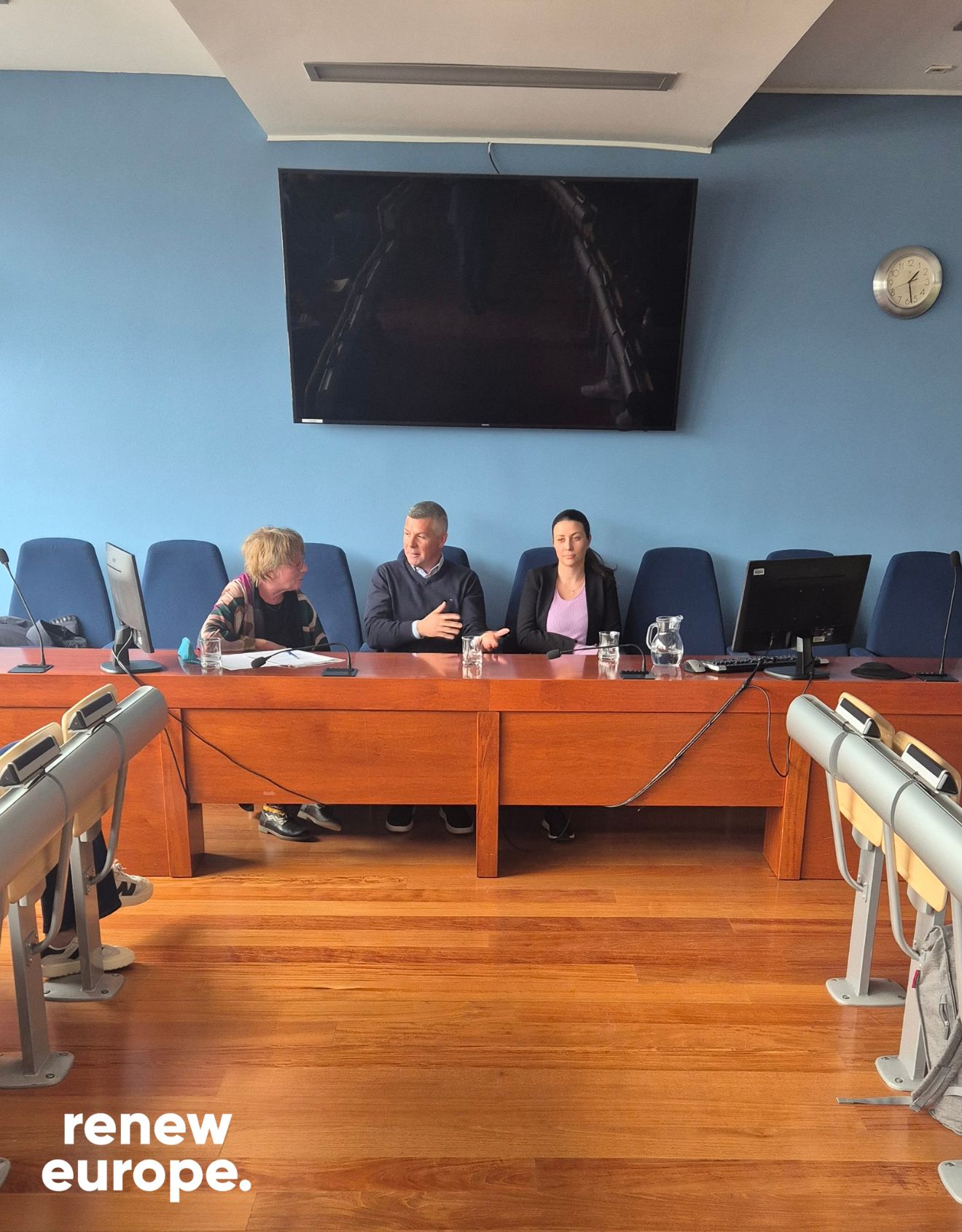
On Wednesday, April 1, 2026, MEP Irena Joveva visited the Faculty of Arts of the University of Ljubljana, where she participated in a round table discussion as part of the course Education for Democratic Citizenship. She discussed the work of MEPs with students of pedagogy and andragogy, and also touched on the common foreign and security policy and the dynamics between the European Union and Slovenia. “The disintegration of the European Union from within is even more dangerous than external threats; unfortunately, authoritarianism is increasing, although there are also bright exceptions,” Joveva emphasized regarding the threat to the future of the Union.

In her introduction, Joveva stressed that she perceives her current mandate as even more unpredictable than her first. Although the latter was heavily marked by the Covid-19 pandemic, the current mandate is, in her opinion, even more challenging, as it is shaped by the intertwining of numerous global crises, from the war in Ukraine and the situation in Gaza to the increasingly unpredictable and dangerous policies of US President Donald Trump. She also warned of the strengthening of the far right and stressed that the traditional division between left and right is increasingly being replaced by a split between pro-European and Eurosceptic forces within parliament.

She further explained to the students the diversity within her political group, Renew Europe, where some MEPs focus more on economic issues, while others, including herself, focus on social rights and equality. Despite their differences, they are united by common values, with human rights and the rule of law as the foundation. “Of course, the group coordinates before votes, but in the end I always vote according to my conscience,” she emphasized, adding that her beliefs largely coincide with the views of the group of which she is vice-chair.

The conversation also touched on the aspirations for national sovereignty and the desire for a strong, united Europe. Joveva assessed that strong states are not necessarily in contradiction with a strong European Union, but she also pointed out the duplicity of some sovereignists who, on the one hand, block key legislation, and on the other, willingly collect European funds.

“I call them self-proclaimed patriots. The disintegration of the European Union from within is even more dangerous than external threats, unfortunately there is more and more authoritarianism, although there are bright exceptions. It is absolutely possible to combine sovereignty and at the same time be aware of common standards. I believe that we urgently need reform, especially in the field of security and foreign policy. The rules that we have now, including the veto, are being exploited by some leaders for their own, personal interests.”

When asked whether we can still talk about a common European foreign and security policy of the Union in times of numerous regional conflicts, she gave a critical answer, especially regarding the lack of credibility in responding to international crises. “I don’t even know anymore whether these are double, triple standards, or whether we can even call these standards,” and cited as an example that the European Union correctly sided with the victim in the case of Ukraine, but did not do so again in the case of Gaza. She also expressed her belief that Israeli Prime Minister Netanyahu should be treated according to the same criteria as Russian President Putin.

In the final part of the debate, which was also attended by MEP Matjaž Nemec, Joveva presented her view on the role of Slovenia and emphasized that the influence of the country should not depend on its size, but on the self-confidence and proactivity of its leadership in asserting its own positions. “We are a small country, but this smallness is mainly in our heads. I don’t notice it and I am proud to be Slovenian. We have great credibility in the European Union and are perceived very positively,” she concluded.

Let me first reassure those who are worried about my grammar: I didn’t make a typo. Equality is the most appropriate term in this case. And correct. If you take the time to read the post, you might be able to understand why.

We are not just talking about formal equality of rights. We are talking about equality in practice – about the actual possibility for every individual to live, work and make decisions without the limitations determined by gender.

Both within the European Union and beyond, we often hear praise for progress in the field of gender equality. And it is true – steps have been made. But it is also true that we are still far from the goal. This very realization was one of the key guiding principles in the preparation of the European Parliament resolution on the pay and pension gap – adopted today. I participated in it as the main rapporteur, i.e. the Parliament’s negotiator for the text, demands and guidelines.

Because inequality, even if it is minor, is unfortunately not a thing of the past. It is a thing of the present.

But we have to start in the past.

One of the most famous slogans of the fight for workers’ rights is: “We do not want to be second-class workers”. I believe that each of us has heard it. And yes – I use the masculine form on purpose.

In 1968, this slogan was carried on banners by women in Great Britain. Female workers at the Ford factory, including Rose Boland, found that they were placed in a lower pay bracket than their male colleagues, despite doing equally demanding work.

They did the same work. They were less valued. And paid less.

So they went on strike. Their strike halted car production for weeks and dealt a serious blow to the British economy. And only then – when the system came to a standstill – were their demands heard.

It is no coincidence that the key role in the changes was played by politician Barbara Castle, who implemented the Equal Pay for Equal Work Act.

But this was not the first such case.

Have you heard of Gabrielle Defrenne? A Belgian flight attendant for Sabena Airlines, where women were paid less than men and had to leave their jobs at the age of 40.

She decided to sue, thus initiating one of the most important court cases in the history of the European Union.

The Court of Justice of the EU has ruled clearly: equal pay is not just a principle. It is a fundamental right. This decision has cemented equality at the very foundation of European law.

Now let’s skip forward almost 70 years. To today.

  • 12% average gender pay gap
  • 25% pension gap
  • 28% of women work part-time due to caring responsibilities
  • 74% of women perform care and household work on a daily basis
  • 22% risk of poverty for women
  • 35% of women experience psychological or sexual harassment

This is not a statistic. This is reality. A reality that exists despite legislation, despite rights, despite progress. And THAT is WHY we drafted a resolution on the pay and pension gap.

The report aims for equality in education, employment and the sharing of care work. It highlights women’s contribution to economic growth, the importance of intersectionality and the need for decisive action at EU and Member State level.

We placed special emphasis on work evaluation.

Today, sectors such as health, care, upbringing and education – sectors dominated by women – are systematically undervalued. And yet these very sectors are the foundation of social cohesion.

The pay gap is not a coincidence. It is a consequence. The consequence of horizontal segregation of the labor market, the undervaluation of feminized professions, and the unequal distribution of unpaid care work.

We therefore demand action: consistent implementation of the directives, a European supply strategy and a new European supply deal, backed by concrete investments.

We demand an action plan to close the gap. Guidelines for gender-neutral job evaluation. Implementation of the Istanbul Convention. And full implementation of the Pay Transparency Directive.

If these measures are implemented, we could also talk about real progress.

But unfortunately, the world is not perfect. This was also shown by the debate at the March plenary session, where some women took a stand against women’s rights – under the guise of “traditional values” that are being re-established.

In recent years, the “traditional” role of a woman who exclusively takes care of the household and raises children has begun to be romanticized through the influence of social media.

Of course, everyone has the right to choose and I support anyone who makes that choice of their own free will. However, on social media, these “traditional women”, who are supposedly unemployed, bring the majority of the income into the household, thereby ensuring financial independence and the ability to make a different decision at any time in their lives.

At the same time, they are bringing a dangerous movement into society, reducing the role of women to that of housewife, mother, and caregiver, without regard for financial independence. And that benefits no one. Not even the most “traditional” men.

The fact is: women make up half of the population. And we are the foundation of society – from the family to the economy and politics.

Today we stand on the shoulders of women like Rose Boland and Gabrielle Defrenne. And even more so on the shoulders of our mothers, who throughout their lives, in one way or another, faced or fought for their place in society. For equality.

Now it’s up to us to shape the world for future generations. At least half of them will be women. And I will never agree to the curtailment of rights or the perpetuation of inequality. Equality is not an ideology. It is the foundation of a just society. And equality does not happen by itself.

It is a decision. And every decision can build a society… or tear it down. My decisions will always be directed towards a society where equality is not a privilege. And where no one is “second-class”. That is the society I want.

For us. And for all who are yet to come.

It’s like this: I have never – and I never will – support someone because I have to. Because it’s easier that way.

No. I don’t have to.

But I have always – and I always will – tell the truth. I will now too.

I don’t always get everything right. But the difference between me and many people is probably that I have no problem saying it. To anyone. At any time. Believe me, each of my colleagues knows exactly what I think.

When it comes to fundamental issues of international law and humanity, I don’t expect silence. I expect arguments. Still.

But … the world is really turned upside down when those who befriend genocidal people and constantly relativize such issues suddenly appear today as their greatest advocates.

The world. Is. Really. Turned. Upside. Standards are not a matter of comfort.

When people are being eliminated with “you’re too young”, I don’t expect additional patronage. I expect responsibility.

Standards are not a matter of years.

Standards are a matter of whether you are willing to play by them… or to walk away. Hiring actors from abroad when arguments and responsibilities run out?!

This is no longer just a campaign. This is a revelation. Methods that do not belong in a democratic world. A revelation of how far some people are willing to go to return to power.

If we accept such methods as normal, we will get even more of them.

This, dear readers of this article, is the essence of these elections. Will we say that there are limits? Are there standards? Or will we admit that there will be no more? When standards fall, democracy falls.

And let there be no misunderstanding! Politics is not above people. Politics is not above rules. There must be NO tolerance for corruption.

On Sunday, we are not only deciding who will sit in the National Assembly or who will lead the government.

Go to the elections. Set a standard. If you don’t, others will. Except then you won’t have to choose anymore.

I will. Freely.

Not because it’s a perfect choice. But it’s a choice that I can calmly say: I know I made the right one.

Because patriotism without standards is not love for the country for me. It’s just an excuse for (the desire to return to) power.

And because it’s about whether we’ll still have the right to choose… or whether we’ll just continue to accept.

Therefore… Freedom.

In the past few days, we have – as I announced – met with the EU Council and the member states.

We met twice. Negotiated? Not once.

We, the parliamentary negotiators, were ready for a compromise: an extension of the current rules, but with clear safeguards. And above all – without the possibility of unlimited inspection of ALL people’s PRIVATE communications.

The EU Council did not budge a millimeter. The only thing they wanted to discuss was the length of the extension of the current rules. They did not want to disclose the content.

Speaking of content: currently, there is a so-called temporary legislative exception that allows technology companies to voluntarily scan private communications in search of child sexual abuse material. This is precisely the core of the problem: this allows for broad invasions of privacy and opens the door to indiscriminate surveillance of all communications. Of all and from all.

This exception is supposed to be temporary, because negotiations are underway at the same time on legislation that would regulate these matters in the long term. But this “temporary” was extended again and again. Two years, then for another two years, then for another two years…

I could not agree to this, and because of this, during the negotiations I once again heard the well-known insinuations: that we do not care about children. Today I am even reading statements that we are protecting sexual predators. And this from some colleagues from the largest political group. The one from which two parties in Slovenia come. You can guess which two, right?

Such manipulations are not new. But it is a new reality that we are also seeing at home these days: how quickly interference in communications can turn into a political weapon.

And the protection of children cannot and must not become an excuse for mass surveillance of everyone’s private communications.

So we have not reached an agreement. This means that these temporary rules will expire at the beginning of April. There is no new legislation yet and we do not know when it will be.

Journalists therefore asked me if all these “negotiations” were a waste of time. Not for me. My conscience is clear.

The fight against child abuse must be effective. But what the negotiators on the other side wanted is not the solution.

And that is precisely why the rules are important. And that is precisely why the electoral reminder is in place: if you cannot vote on Sunday, you can still vote early today and tomorrow.

Because democracy is also about going to the polls – before someone else starts deciding for us.

On Wednesday, March 11, 2026, MEP Irena Joveva participated in the plenary debate entitled Child Sexual Abuse Online: Protect Children, Not Perpetrators, where she emphasized that everyone agrees that child protection is essential, but the proposed approaches, which involve mass interference in private communications on the Internet, are not an appropriate solution.

In her opening remarks, Joveva warned that the title and the framework of the debate create a misleading impression, as if opponents of the proposed measures are defending child sexual abusers. In her opinion, the proposed measures, such as mass interference in private communications, do not mean effective protection of children, but rather set a dangerous precedent for general surveillance of the communications of all users.

She also highlighted the role of large technology companies, which already have large amounts of personal data at their disposal, and that additional powers to review private messages could further increase interference with individuals’ privacy and open up room for abuse, including the possibility of broader control over society:

“It means that privately sent pictures of our children in swimsuits will continue to be reviewed by Facebook staff. It means that intimate photos of couples may suddenly no longer be private. Above all, it means unimaginable possibilities for surveillance of people. A wet dream for repressive regimes.”

In conclusion, she concluded that measures to combat child sexual abuse online should be specifically targeted at perpetrators of criminal acts, rather than designed as a general surveillance of all internet users, and at the same time called for caution in political and public debates in which the argument of child protection is often used, as such calls may hide solutions that ultimately harm the rights of everyone – including children.