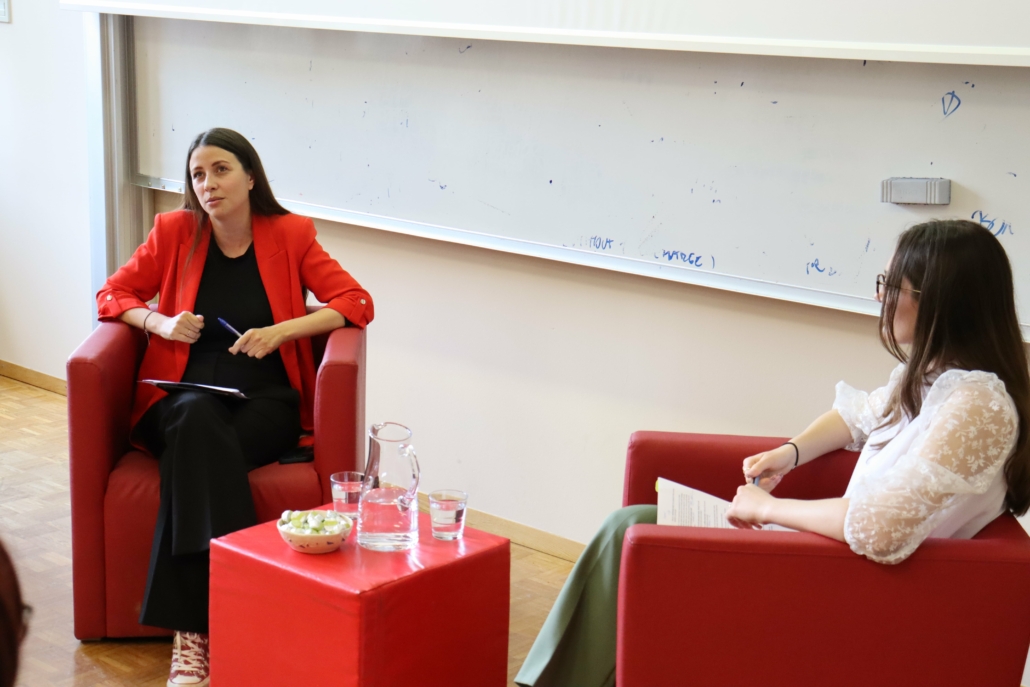
On Friday, 8 September 2022, MEP Irena Joveva attended a press briefing at Hiša EU (House of the EU) ahead of the September plenary session. The briefing focused on tackling the current energy crisis. Joveva stressed the need for a common response at the European level, and that independence from all fossil fuels is a must; not least “so that the Earth does not melt, and we or our descendants with it”. She expects the President of the European Commission, Ursula von der Leyen, to elaborate on how the EU will address this in her annual State of the Union speech.
In this context, Joveva also expects President von der Leyen to make more specific proposals on how to better tackle climate change, and, in particular, how to prepare for periods of drought and fires. She added that she agrees with the proposal for a price cap on electricity and gas, as it is essential to reduce costs for domestic users and prevent businesses from running into difficulties or failing.
“There is also a need to reform the Union’s energy market in the long term, because unfortunately it is not fir for purpose at the moment. Above all, at this point in time, we should decouple electricity and gas prices.”
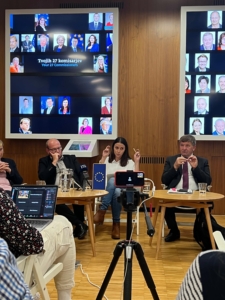 On the decoupling of gas from electricity, the MEP stressed that the electricity market must be designed in such a way that cheaper forms of energy production can continue to invest in cleaner production methods that are also in line with the Green Deal, and that she expects more understanding from the Council and the Member States in this regard. She underscored that the environmental crisis must not be neglected either.
Asked by the press how the current cost of living crisis will affect the implementation of the measures under the Recovery and Resilience Plan, the MEP replied that the Green Deal must not be allowed to disintegrate. The environmental crisis is as acute as the price inflation. And if we do not want the world to melt before our eyes, we need to act swiftly and decisively. That is why she is also in favour of making the use of the Recovery and Resilience Facility as flexible as possible.
“I would also like to see more ambitious and clear definitions from the European Commission President regarding the future of the EU and its institutional setup.”
At the same time, she underlined that during the next week’s plenary session, she will support both legislative proposals from the Fit for 55 package, as well as the proposal for a directive on minimum wages.
During the press briefing, Joveva also took the opportunity to mention the report on the impact of COVID-19 closures of educational, cultural, youth and sports activities on children and young people in the EU, where she acted as rapporteur on behalf of her Renew Europe group. She is extremely proud of the report and her work on it, and is therefore all the more looking forward to seeing it approved by the Plenary.
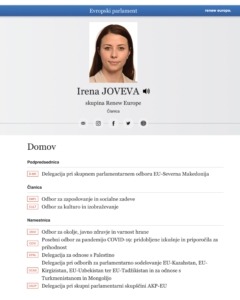 So far, I have been a substitute member of this committee, as I continue to be of the Committee on the Environment, Public Health and Food Safety, and have “only” been a full member of the Committee on Culture and Education. It is not often the case that an MEP gets full membership (with voting rights) of two committees, therefore I consider it a great honour and I trust that this, too, is a testament to my work so far.
 As rapporteur on behalf of Renew Europe for the European Solidarity Corps, Ms Joveva presented a few details about this programme, for which a separate budget line has been foreseen for the first time and much more funding envisaged than in previous years. The European Solidarity Corps allows young Europeans to volunteer or participate in projects in an EU Member State or a partner country. She called for a greater promotion of the high-quality and diverse programme that shows that the European Parliament appreciates volunteering and wishes to ensure that it is as inclusive and accessible as possible for those in need.
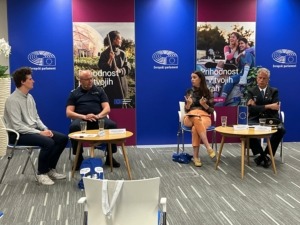 Finally, Joveva expressed her wish that volunteering should not be taken for granted, which might be happening under the influence of the growing individualism in society.
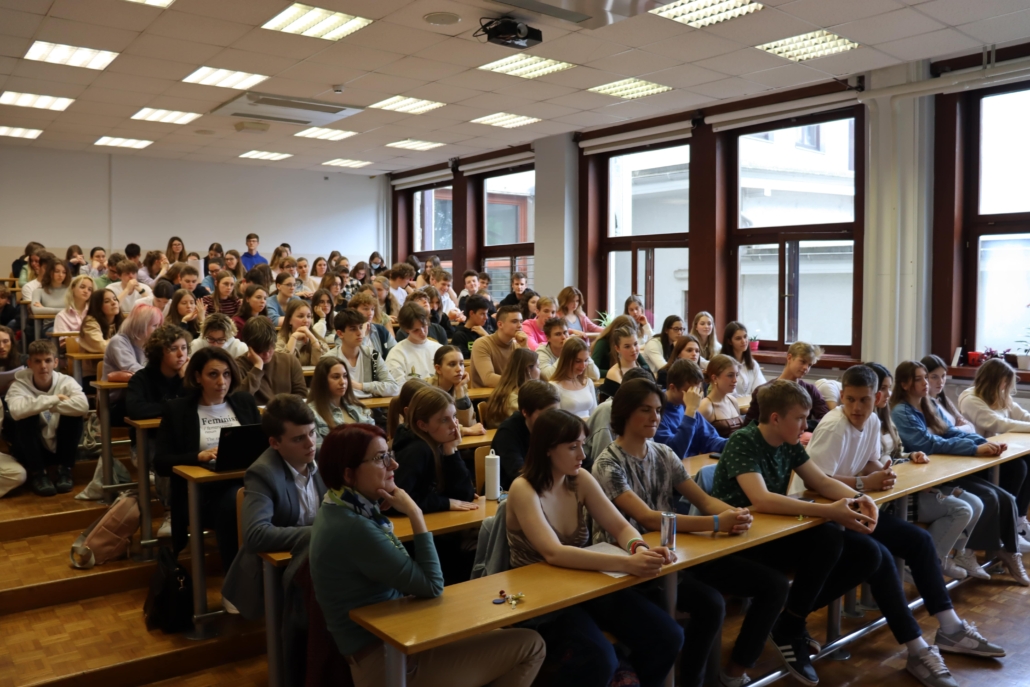
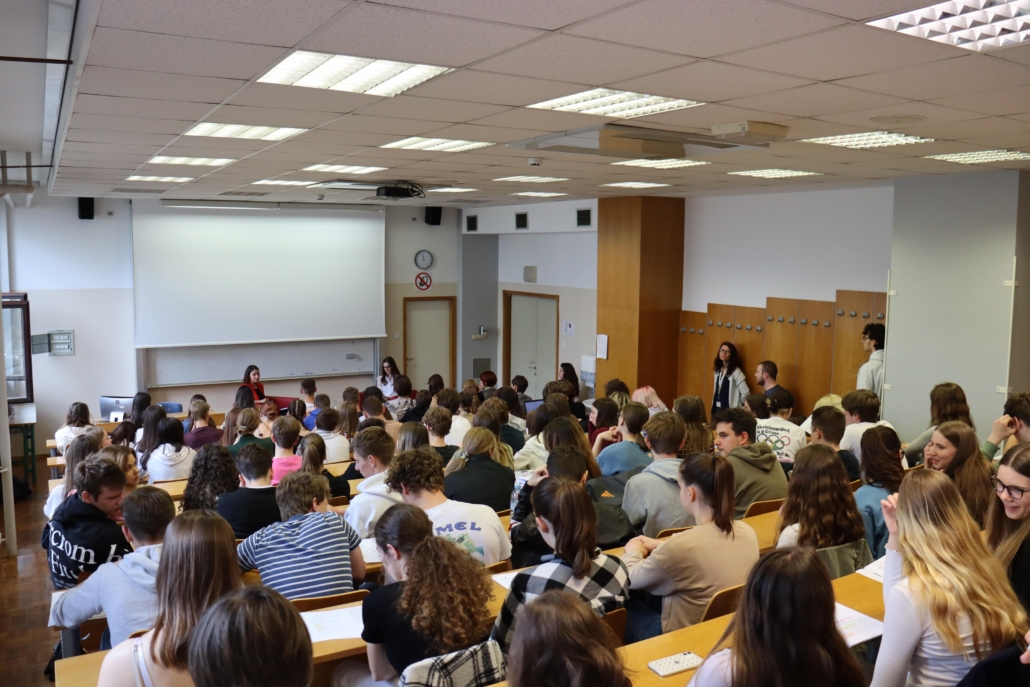
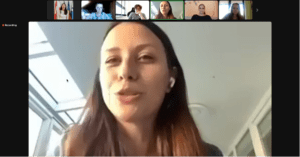 During the discussion, some young people pointed out that a lot of new equipment has been purchased for distance learning, which schools and universities could also use in the future. Joveva agreed, believing that the benefits of the technological advances made during the epidemic should be preserved to the greatest extent possible. She mentioned the example of electronic voting introduced in the European Parliament, which has made it possible to better monitor the votes cast by MEPs, making voting fully transparent. In her view, this allows for a more democratic and fairer approach.
 Joveva maintained that as long as mental health is stigmatised to such an extent, young people will not dare to seek help, which will inevitably lead to an even greater increase in mental distress. She believes that overcoming stigma requires education and providing people with the right information. This should start with mainstreaming mental health into school systems, while a frank conversation about mental health must continue with all members of our society (peers, parents, doctors, teachers, influencers, etc.).
 A large part of the discussion was devoted to current events in Slovenia and Europe. Joveva explained that the elections in France and Slovenia showed that people do not want extreme policies and division. She repeated how important it is to exercise the right to vote, otherwise one should not feel entitled to be critical of the elected representatives of the people. She also expressed dissatisfaction with the way the campaign had been run and with the political messages directed at young people: “I don’t think there was enough focus on young people. Apart from the platitudes that are heard time and again, there wasn’t much substance.”