Foto: Neboje Tejić/STA

On Wednesday, 2 February 2022, MEP Irena Joveva hosted the President of the LMŠ party, Marjan Šarec, in a “live” conversation on her Instagram profile @ijoveva. In a relaxed atmosphere, they gave their unfiltered and uncensored replies to the questions posed by followers.

They started by answering a question about the things they miss most from their life before politics.  “There are many things… I was more relaxed, I could do things more freely, and I miss all the people I worked with before I entered politics,” said Marjan Šarec, and Irena Joveva could only agree with him about the people she misses. She added that from a professional point of view, she also misses fieldwork as a journalist, when she could research, do interviews and write contributions. They recalled Irena’s entry into politics and Šarec was frank: “It’s no secret, I was the instigator. I called her and asked whether she would be the lead candidate for the European elections. When she answered, I knew that this was it, that this was the right decision. I will certainly never regret it.” They also noted that the experience of the past often comes in handy. For Joveva, her knowledge of broader political topics and the necessary rhetoric skills: “In the European Parliament, we have about one minute to speak or debate. I have experience of live reporting that was of the same length, so I find it much easier than my colleagues to summarise what I mean in that one minute.’
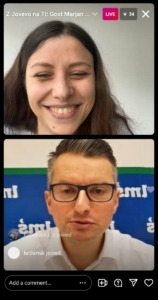
Since they have been in politics, the main source of satisfaction for both of them has been people’s response to their work. Joveva is keeping her campaign promise that she is there for the people who sent her to Brussels: “When you know that you have helped someone, answered their question or helped in a more concrete way, submitted a question for the Commission, asked a fellow politician a question, raised a topic in a meeting, submitted an amendment and thus actually changed the legislation.” Šarec added: “Irena and I both come from a working-class or farming background, our lives have not always been a walk in the park and we know that effort has to be put in to achieve results. Nothing has been given to us for free. This is also how we approach our work in politics. I don’t like snobbery and pretentiousness, I have always been happiest when I have been able to have direct contact with people.” Politics, he says, reveals who you really are.

The next part of the conversation was devoted to answering the questions submitted by followers. Instagram is a “social network for the young”, but the audience was nevertheless interested in substantive and very specific areas. The first question was about the current and possible new electoral system, which has always been one of the most important issues for the LMŠ party. A bill was previously drafted during the government led by Šarec which introduced a majority system, preferential voting and the abolition of electoral districts, but unfortunately, due to the purely personal interests of some deputies, it was not adopted. “As long as the electoral system isn’t changed and it continues to be complicated, distant from the people and prevents them from playing a decisive role in the selection of deputies, there will be no political change in Slovenia. The electoral system we are advocating could also address the issue of recalling a deputy, which is currently impossible,” Šarec explained.

Housing, especially for young people, is another issue that can no longer be swept under the carpet. Marjan Šarec described the LMŠ efforts in this direction so far:

“Under our government, we prepared a housing loan guarantee act. We also wanted to transfer to the bad bank the land on which the bank Asset Management Company would build apartments. Our party programme also contains a proposal about the creation of housing cooperatives based on foreign models, as this has proven a good solution. It contains the regulation of short-term rentals, the possibility of buying the first owner-occupied home with repayment through rent, and the strengthening of the public housing stock. But we also need to enable young people to enter the labour market as quickly as possible, as this is the only way to get a loan.”

Šarec and Joveva also touched upon the “Magyarisation of Slovenia”. They both see a solution in taking part in the elections of 24 April 2022. It is important to remember that there are no perfect candidates. “Somebody has to be given a vote and then be held accountable,” said Šarec.  He believes that the current Prime Minister has become a servant of Budapest and Slovenia a vassal state. During this term, the LMŠ has set up two inquiry commissions to investigate illegal appointments within the police and suspicious procurement of protective equipment, respectively. If necessary, it will set up a new one in the next term to investigate hotel sales:

“All these transactions will need to be audited and all harmful laws repealed. As LMŠ, we are uncompromising when it comes to corruption and investigation. We will certainly demand audits, and we can do this as we owe nobody any favours.”

Joveva and Šarec are also aware of the problems in public health care. According to Marjan Šarec, pay increases in only one salary group will cause major problems and chaos. He believes that the remuneration system needs to be regulated anew in a systemic and complete manner: “The first task the next government will need to tackle will be to negotiate with trade unions, as was the case in 2018.” The shortage of family doctors is a problem that can only be solved in the long term. In addition to corruption, Šarec also sees a problem in the organisation of work and “amphibian practice” which allows some doctors not to contribute as much as they could to the public system, and instead work in their private self-pay outpatient clinics in the afternoon. In addition, supplementary health insurance should be abolished, as it has long since become compulsory if one wishes to benefit from the full basket of healthcare services.
Meanwhile, the COVID-19 epidemic has not only exposed problems in the health care sector, but also the confusion thrown up by the measures dictated by the government. Šarec and Joveva agreed that, during the pandemic, the authorities’ communication with citizens was the primary problem. Šarec advocates softer measures in dealing with the epidemic, such as distancing, masks, hand and cough hygiene, self-testing of everyone, including those who have been vaccinated, and strict adherence to quarantine.  However, he does not support compulsory vaccination. He added that, as a result, the LMŠ would not be able to work with parties that oppose all COVID measures, even if some people should find this a good idea.

Šarec and Joveva also touched on the need for a transition to a knowledge-based society, for development and digitalisation of society. “In the LMŠ programme, we have devoted many measures to digitalisation and even foreseen a new Ministry of Science, Research and Digital Transformation.” They commended some systems already in place and highlighted the numerous areas where there is an urgent need for the system to be revamped and upgraded, especially as regards services to citizens. “We still have children who do not have access to the internet, and as long as this is the case, it is difficult to talk about a digital society,” Šarec maintained, adding that the LMŠ programme foresees an increase in funding for science, research and development, with the aim of allocating to these areas up to 1.5% of GDP by 2026.

Finally, Šarec and Joveva urged people to read the LMŠ programme, which is available on the party’s website. As questions continued to come in, they decided to hold another conversation in the near future. In the meantime, you are welcome to watch the recording on  Irena Joveva’s Instagram profile.

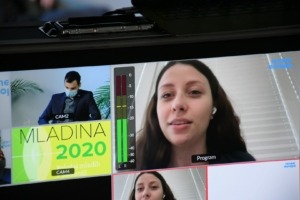
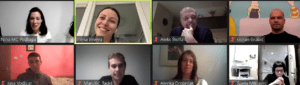
On Thursday, 27 January 2022, MEP Irena Joveva was invited to take part in an online dialogue with young people held under the rEUral Europe project. They discussed the work of the European Parliament, equality of women in politics, youth engagement and other topical issues.

The young participants raised many interesting questions, with the usual icebreaker being the one about the reasons for her entering the world of politics. Joveva explained that she had followed politics with her father from early age. As a journalist, she experienced, saw and heard many things which made her feel angry and disappointed. When she was invited to go into politics, she couldn’t refuse, as it meant an opportunity to try to do things the way she thinks is right. Her primary focus is on young people and on the situation in the media and journalism, where pressure has been growing over recent months: “What is happening is alarming. Regrettably, the institutions do not have enough appropriate tools to react, and the usual answer is that this matter falls under the responsibility of Member States, which indeed is largely the case.” This is why she believes that the European Media Freedom Act will be crucial, as it is the first piece of legislation in this area.

In her work in the European Parliament, Joveva does not feel gender inequality or unequal treatment based on sex, but the two are more pronounced on social media: “You are judged on the basis of gender, origin, previous occupation, youth. There is quite a number of comments that I think would not have been made if I were a man, ”  she said, adding: “This is widespread, especially on Twitter, which is a cesspit of anything you can imagine. There is also a lot of patronising.” She even receives threats on social media, mainly anonymous, and she feels that the negative trend has grown worse in recent months. She attributes this to the change in the general social climate, because some politicians who are in power afford to make comments that should have no place in public discourse and, as a result, people are emboldened to say or do more. Joveva believes that the under-representation of women in politics is mainly due to stereotypes and social conditioning: “The profession of a politician is among those that are perceived as pertaining to men, which is why far fewer women decide to enter politics. In addition, the conditions are not particularly conducive to family life, especially if you have or intend to have small children. It is not sufficiently understood that genders are interconnected and not disconnected.” Joveva supports gender quotas, because without them the number of women in politics would be even lower, but believes that the solution for the future lies in neutral quotas and education.

The MEP also spoke about the negative aspects of Brussels: “What bothers me the most is that many of my colleagues have lost touch with reality.” The Parliament is a huge system and a kind of bubble, where it is difficult to keep in touch with reality, but for herself, she is very mindful of “keeping both feet firmly on the ground”, as she put it. She finds the two seats of the European Parliament, one in Brussels and one in Strasbourg, utterly absurd, but regrettably has no influence on the matter. Still, she is happy to be able to do a lot in other fields: “With amendments, reports, lobbying and forging friendships one can achieve and get a lot. This journey is not in vain. Some of my expectations have crumbled, but others have been consolidated.”

Joveva’s priorities for the second part of the term include two key objectives. She sees the European Year of Youth as an opportunity to raise awareness about young people’s problems and to develop projects linked to Slovenia: “I intend to set up a website where young people can submit their ideas and, on this basis, I will decide what can best be done — perhaps to put a question to the Commission, send a letter to the relevant authorities, draft a report, or submit an amendment to a legislative proposal.” She also wants to be actively involved in the drafting of the European Media Freedom Act. At the same time, she is linked to a smaller group of MEPs who are seeking to ensure that the European Parliament retains the possibility of teleworking in certain segments, which is particularly important for women Members who are or are about to become new mothers, as the office of an MEP does not provide for maternity leave: “We want to make it easier for women to decide to have children, because working conditions for them will be friendlier, if we maintain the current teleworking method.”

Joveva also believes that young people are not taken seriously enough when they participate in public debate. “We all talk about the future of Europe and refer to the next generation, we are even holding a conference where young people are supposed to have a leading role, and then the Committee consists of people who are not even my age, but much older. And when conferences on youth are organised in Slovenia, the speakers are in their 70s,” she added, alluding again to the patronising attitude which abounds in politics. According to her, young people would not perceive politics as something negative if most politicians were to set a good example. But if the people in power think that they can do whatever they please, this influences the young who then think that all politicians are the same.

“What should be done? A lot can be done, but some politicians will never change, so it is up to people to remove them from office. And this is done in elections.”

Joveva also answered a question about the absurd situation of the balance of power between the European Parliament and the Council: “This is indeed a tremendous problem, but, regrettably, it is almost never spoken about and nothing is done. The Council and the Parliament are co-legislators. We pass laws by a majority. In the Council, however, decisions are normally taken by consensus, and this is the main problem because all Member States need to be in favour.” She highlighted some legislative solutions, such as the Pact on Migration, which are victims of the partial political interests of individual Member States, which have for a long time not acted in line with European values. “I think that at least two Member States should no longer be members of the EU at all, but the European Parliament is not able to change this singlehandedly,” she concluded.

Joint reaction by MEPs Irena Joveva and Klemen Grošelj to the election of the new President of the European Parliament:

“The election of the new President of the European Parliament, Roberta Metsola, is a result of the political agreement reached by the three largest pro-European political groups on cooperation for the remainder of the current parliamentary term.

We absolutely welcome the fact that, after many years, a woman is again taking the helm of the Parliament, which will, among other things, certainly give additional impetus to the promotion of a higher level of equality in the EU. But in this light, we also underline our unambiguous expectation that the new President will muster the personal and political will credibly and firmly to represent the positions of the European Parliament, in particular on issues where her personal or ideological views diverge. We particularly draw attention to the area of women’s rights, specifically the right to make decisions about their own bodies or the right to abortion. The European Parliament has already adopted a very clear position on this subject, toward which the new President has a negative stance, of which we decidedly do not approve.

There is also the issue of the rule of law, which remains important not only in the context of the protection of fundamental values of the EU and citizens’ rights, but is also turning into the key issue for the further development of the EU. We highlight this primarily due to the fact that the political group of the new President, the European People’s Party, has repeatedly defended political positions which to us are completely unacceptable. We therefore expect President Metsola to continue on the path trodden by the late President David Sassoli.

In view of her public appearances so far, we furthermore hope that President Metsola will accelerate the organisational changes to the functioning of the Parliament that are already underway, in particular towards more substantive debates in plenary meetings. Defending and strengthening the position of the European Parliament, in particular vis-à-vis the Council of the EU as co-legislator, and vis-à-vis the European Commission, in particular as regards the Parliament’s oversight function, will also be an important part of her tasks.”

Joint reaction by MEPs Irena Joveva and Klemen Grošelj to the vote (and) on the resolution on the rule of law in Slovenia:

“The fact that the resolution on the issue of the rule of law and fundamental rights in Slovenia has today been endorsed by a majority in the European Parliament regrettably puts us again in the company of countries such as Hungary and Poland, where the state authorities have turned the democratic order of the country into the authoritarian rule (of the interest groups) of a single party. The resolution adopted today highlights cases of systematic violations of the rule of law based on credible sources, such as the European Commission’s annual reports on the rule of law and the Council of Europe Commissioner for Human Rights.

The text only includes a few of the key problems encountered under the current authorities. These have escalated and we have been drawing attention to them for quite some time. In addition to clear requirements concerning respect for media freedom, in particular the independence of the national broadcaster RTV Slovenia and the Slovenian Press Agency (STA), and the obligations of the state, which must respect its own legislation, key messages include the exceeding of the powers of the executive, systematic erosion of judicial and prosecutorial independence, politicisation of the police and attacks on all remaining independent regulatory institutions.

The current Government in Slovenia has done a good job of destroying the reputation of our country, which until recently served as an example of exemplary democracy in Europe (among the so-called new Member States). The aim of such a policy is autocracy, which is set against a backdrop of kleptocracy. It should not be forgotten that this also weakens Slovenia’s position within the EU where important reform processes are set to begin with the start of the French Presidency and the new German Government.

It is telling that the European Parliament is forced to require the Slovenian Government to respect the basic principles of a democratic society, such as the separation of powers and the implementation of Constitutional Court decisions. There is an acute awareness in the European Parliament of the systematic violation of the rule of law and democratic norms in Slovenia, and nobody wants another member state whose authorities undermine the EU legal order.”

In her video statement, Joveva made an additional comment:

“Nobody else is to blame for this resolution but the current Government, headed by its Prime Minister. The text contains only some of the most obvious examples of their actions, their attempts to systematically dismantle all social systems or bend them to their purposes, their non-compliance with their own legislation, their attacks, and their deliberate polarisation. False narratives about communist conspiracies under the guise of defending traditional values are no longer credible. The aim of such politics is not to defend these values. Such politics has no values at all. None. The aim of such politics is purely and simply autocracy, set against a backdrop of kleptocracy. And… it is telling that the European Parliament is forced to, by means of a resolution, require the Slovenian Government to respect the basic principles of a democratic society. But quite simply, nobody wants another member state whose authorities undermine the legal order of the European Union.”


Up YU Go! Odjuga.

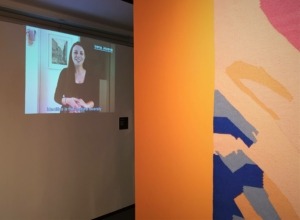
Everyone who knows me also knows I love wordplay. So as soon as I saw its title in both English and Slovene, I knew that this exhibition would be something world-class.

When the (unfortunately) now former director of the National Museum of Contemporary History, Kaja Širok, asked me whether I wished to participate in this project, I didn’t need to think twice about my answer. I was honoured that she had thought of me, too. Yes, I’m honoured because my family, which was originally from the south of Yugoslavia, can also be said to have mustered the courage to ‘up and go’ and come to Slovenia.

The central theme of the exhibition is the stories of people who moved here from the republics of the former Yugoslavia after the Second World War, and their descendants. In its core, the exhibition humanises the processes of belonging, self-discovery, remembering, exclusion, stigmatisation, and othering.

“Labels? Labels are only good for rakija.” This is how the message of the exhibition was beautifully summed up by its co-creator Dragica Dobrila.

“Identities? They say that identities are like underpants. You’ve got several, or you don’t; in other words: your thing, your intimate business.” That is how the musician Magnifico explains it. Because his is also one of the ‘Up-YU-Go’ stories.

In addition to thousands of others, to be clear. The stories of Identities on the Line are actually conceived on the basis of the stories of 40 people who have experienced just that. Even based on my story, my parents’ story. On my identity, my identities.

“Let’s hold up a mirror to all those who look down on us and – unjustifiably – place us somewhere near the bottom of the social ladder. Let’s hold up this mirror to them in such a way that we can show them the best version of ourselves.”

This was my message to all of us who are characterised by multiple identities. And this record is a really minute part of this temporary exhibition. Therefore… Go see it! It will be on display in the premises of the National Museum of Contemporary History of Slovenia until May 2022.

Photo: National Museum of Contemporary History

On Monday, 6 December 2021, MEP Irena Joveva participated in an online debate “What does a green and digital future bring for young people?” organised by the Zavod PIP institute and the Europe Direct Podravje information point. During the debate, the speakers focused on the climate change situation in Slovenia, the impact of the pandemic on the environment, the exit from the COVID-19 crisis supported by the digital and green transitions, the actions outlined in the recovery plans launched at the EU and national levels and, last but not least, on what all this means for the future of young Europeans.

The transition to a climate-neutral society is both a challenge and an opportunity to create a better future for all. In her introduction, Irena Joveva explained that the European Union has adopted ambitious legislation to implement its climate change commitments — the European Green Deal, a flagship strategy that provides a roadmap and a timeline for the Union to deliver on its climate ambitions. “It is a strategy to increase resource efficiency by moving to a clean, circular economy, restoring biodiversity and reducing pollution.” The MEP explained to the young audience that the EU intends to cut greenhouse gas emissions by at least 55% by 2030 compared to 1990 levels, and that it is committed to becoming the first carbon-neutral continent by 2050. “The European Green Deal will also be a lifeline for the post-COVID-19 recovery. Together with the Recovery and Resilience Fund, the measures support a sound economic recovery and development in a green and digital direction.” Still, these are only frameworks and recommendations, said the MEP, adding that everything depends on how strategically Member States manage to put to use the financial assistance and loans and contribute to these transitions. In her view, the green and digital transitions are taking place in parallel and both will have major implications for the future of work and for our systems. “But the two transitions are also fundamentally different, since in the Member States in particular or in the governments’ spending plans a varying sense of urgency can be observed related to their pursuit and implementation. Digitalisation is part of the environmental solution and not part of the problem. Digitalisation can be used to increase energy efficiency, optimise energy management and combine centralised and decentralised approaches.” At the same time, the MEP expressed concern, shared by experts, that smart batteries and waste from renewable energy power plants also need to be deposited somewhere.

The young participants were particularly interested in what the planned Digital Decade will bring for the future of Europe and the young.  Joveva explained that Europe’s Digital Decade is a vision and path for the continent’s digital transformation by 2030. “The Digital Compass for the EU’s Digital Decade is based on four cardinal points: skills, safe and sustainable digital infrastructure, digital transformation of businesses and digitalisation of public services, notably e-health and the digital identity of all Union citizens.” One of the principles proposed in the European Commission’s Communication on the 2030 Digital Compass is the protection and empowerment of children and young people in the online space. Children and young people should be equipped with digital literacy and the necessary skills and competences to navigate safely and responsibly online from a very young age and throughout education and training. “Every child must be protected from harmful and illegal content. We have already paid considerable attention to these issues in Parliament when drafting the Digital Services Act (DSA) and the Digital Markets Act (DSA), where I also participated as shadow rapporteur.

In the follow-up to the debate, Joveva also outlined the opportunities the European Union offers to young people. The most familiar is the Erasmus+ study exchange programme, but there are other options as well. “Within the framework of formal education there are furthermore transnational cooperation programmes such as the CEEPUS regional programme, and in addition there are non-formal education options, ranging from volunteering (European Voluntary Service and European Solidarity Corps) to job search opportunities (EURES network, placements within Erasmus+, traineeships in the EU institutions, ALMA) and various European projects and competitions.

In addition to Joveva, Nives Felić, youth worker from the Zavod Nefiks institute, and Gaja Brecelj, director of Umanotera and Slovenian #EUClimatePact Ambassador took part in the hybrid debate.

On Sunday, 5 December 2021, MEP Irena Joveva spoke at the Regional Liberal Conference organised in Skopje by the Macedonian Liberal Democratic Party (LDP) and the ALDE Party under the title “A Renewed Narrative for Accelerated EU Integration”. Joveva has been critical of both the European Union and certain Member States, emphasising in particular the importance of partnership and cooperation. She also spoke about the threat of illiberal far-right populism.

As a preliminary remark, MEP Joveva noted that relations between the European Union and the Western Balkans had unfortunately not changed much during the two-and-a-half years of the European Parliament’s current term. This is partly due to the pandemic, which has overshadowed other topics, but also at the Brdo Summit, which was supposedly aimed precisely at promoting enlargement, Member States proved very reluctant to use the very word “enlargement”. She recalled a number of obstacles to enlargement, such as the Greek and later Bulgarian veto as well as the French “non” to North Macedonia: “I wish to underline that in accordance with the Treaties, bilateral disputes should not be used to prevent a candidate country from entering into negotiations. This is therefore a clear case of an EU Member State not respecting this principle and plainly exploiting North Macedonia’s position for its own political expediency. Once again, the EU’s unanimity rule is showing its weakness — that one Member State, out of 27, can stop the progress of one nation.” She pointed out that this had led the European Parliament to openly and vociferously criticise first the Commission and then the Council, as promises have to be kept and good work rewarded.

“The Western Balkan countries, our immediate European neighbours, should compete with each other in the sense of which will carry out the most reforms and improve the lives of their citizens, and they should offer each other support and expertise in order to facilitate this common process. The European Union should help us support and encourage each other,” she said, while noting that unfortunately many Western Balkan countries are bogged down in reforms, nationalism and ethno-nationalist narratives of the 1990s, which prevents them from making progress. The Western Balkan countries should perceive EU enlargement as an objective that will allow all their citizens, irrespective of where they live and of their ethnic or religious background, to feel appreciated, safe, heard and respected.

The MEP also condemned the actions of the European Union, which is losing credibility in the Western Balkans due to numerous unfulfilled promises. In her view, the integration of these countries into the EU is a geopolitical necessity that will ensure peace and sustainable development in the area. Only by standing shoulder to shoulder can the EU and the Western Balkans address many issues of great importance for the future.

“I don‘t wish to sound pessimistic, but I don’t see many radical changes in the near future. Of course, the Commission’s new enlargement package was promising, but the assumption that all six Western Balkan countries could soon join the EU is not very realistic, especially as there has been an authoritarian turnaround in some EU countries, which at the moment would certainly not be in favour of the enlargement package. The EU must therefore also be more stringent vis-à-vis its Member States. We see the deterioration in the areas of media freedom, the rule of law and civil liberties in some Member States, which is why profound changes are very much needed in the EU. Unfortunately, this can be observed in Hungary, Poland and, more recently, in my own country, Slovenia. This shows how illiberal far-right populism can weaken the rule of law, dismantle the independence of the judiciary, public media, regulatory agencies and independent institutions, and it can do this in a very short time. This is currently the biggest threat, both in the Western Balkans and in the EU Member States.”

Joveva stressed that this ideology is closely linked to ethno-nationalist tendencies and is as such not only an obstacle to accession and a threat to peace, but also undermines the very structure of the European Union. “However, we need to be clear about what is happening: artificially created ideological conflicts are only a guise for authoritarian rule, which in turn is a guise for kleptocracy. And everyone, including those who pretend to be liberal and a part of our family but support such illiberal leaders, is part of the problem, not of a solution,” she said sharply before concluding her address with the following thought: “We must work together to fight illiberalism across Europe and strengthen our common values. It should not be forgotten that we are partners in this and that the process is difficult and long, but ultimately leads to a victory. It must lead to a victory for the European Union, for the Western Balkans, and above all for the citizens of all the Western Balkan countries, who deserve a better and safer life.”

In the video, you can listen to a slightly shortened version of the address:


Today, on 26 November 2021, MEP Irena Joveva was a guest of Radio Kum. As she approaches the halfway point of her term of office, she reflected on her past work and the challenges ahead. She commented on the social and political changes caused by the pandemic, and the European policies to manage the post-pandemic situation and the recovery, as well as on political developments in Slovenia.

Not long after the start of her term of office, the world was hit by the pandemic. MEP Joveva does not doubt the important the role of the European Union in tackling the crisis: “Although Brussels often seems irrelevant, it is everything but. It is precisely common action in all areas that has made and will continue to make it much easier for Member States to deal with the pandemic than we could have done individually.” It is regrettable, however, that the pandemic has also accelerated the spread of various highly dangerous ideologies, such as fascism, different forms of intolerance and the erosion of democracy, which even Slovenia is not immune to.

Over the past two and a half years, Joveva, a member of four committees, has been actively working on a number of areas. The Special Committee on Cancer drafted a motion for a European Parliament resolution on strengthening Europe in the fight against cancer. “An important objective of the first half of the term was the creation and adoption of NextGeneration EU, the Recovery and Resilience Facility, which is now integrated into the EU’s long-term budget. These funds will enable Member States to achieve a breakthrough and develop in the post-pandemic period,” she said, welcoming the fact that much more funding is directed to initiatives for the young. In the Committee on Culture, the work over the recent period has focused on the media, freedom of the press and government interference in Poland, Hungary and, unfortunately, also in Slovenia. A number of legislative solutions are in the pipeline — ranging from the European Media Freedom Act to the Digital Services Act and Digital Markets Act and perhaps soon the so-called anti-SLAPP legislation will follow aimed at preventing abuse of the legal system to silence journalists, NGOs and civil society.

The MEP finds the situation in Slovenia worrying: “Over the last year, the Slovenian Press Agency was a hostage of the Janez Janša Government. They wanted to bring the agency to its knees, gain the power to enforce their own editorial policies. They try to achieve the same with the personnel changes at the national television broadcaster.” Nor did the Twitter outbursts of the current government team go unnoticed in Europe, all of which led to a point where the European Parliament’s Civil Liberties Committee sent a delegation to Slovenia to examine the state of democracy.

“The report makes it clear that they are deeply concerned about the climate of hostility and deep polarisation in the country — which is precisely what Janez Janša is trying to achieve. And we have even come to the point where the European Parliament will be deliberating the first ever resolution on the situation in the area of fundamental rights and the rule of law in Slovenia, presumably in December. And no, this is not an attempt ‘to export’ domestic politics, rather it proves that it is clear to everyone what is happening and how dangerous it is.”

Joveva has also been critical of the European level, which, in her view, has been too slow to act and whose mechanisms are too rigid. Even in the case of the most serious violations of European fundamental values, the European Union does not apply its sanctioning mechanism – making the disbursement of European funds conditional on compliance with the rule of law.

The MEP also spoke about motherhood: “I have been very keen to become a mother, but it was not so easy and self-evident. This was my third pregnancy and my fourth child, the first one to be carried full term. This is why, when she was born, my happiness was all the greater. It is true, however, that this is a daunting task. Nothing can prepare you for this — all this love and unconditional dedication, or how hard it can be.” Even though her daughter is only a few months old, the MEP works full time, as no maternity leave is foreseen for MEPs. At present, she is able to work from home due to the pandemic, but she was critical of the reckless and sudden decisions by the President of the European Parliament, David Sassoli, who last month hastily abolished teleworking, only to allow it again later because of pressure from young MEPs. Still, Joveva intends to attend the December Plenary Session in Strasbourg with her daughter for the first time.

Finally, she called upon listeners to show confidence in science, progress and development. “Let us be friendly, understanding, tolerant and above all — responsible. And yes. Let us turn out and vote in elections. This is not only our right; it is our shared responsibility. So that in the end it is not others who decide in your stead,” she concluded.

Today, on 24 November 2021, MEPs discussed fundamental freedoms and the rule of law in Slovenia, in particular the complications around the appointment of European Delegated Prosecutors.  

If you criticise, attacks will follow. Either there is subordination or destruction. Either you support this government or you must leave. Either you belong to them or — basically —be careful.” These are the words MEP Irena Joveva used to open her debate on Slovenia. She underscored that deviations from democratic norms reach beyond national boundaries and become a problem for the Union, as was illustrated by the examples of Poland and Hungary.

In October, a delegation from the Committee on Civil Liberties, Justice and Home Affairs of the European Parliament examined the state of the rule of law and democracy in Slovenia, and in particular expressed concern about the non-appointment of European Delegated Prosecutors and the non-payment of services provided by the Slovenian Press Agency (STA). “The current Slovenian Government has recently yielded to pressure, mainly from the EU. They released STA funding, after almost a year of manipulation. They took note of the names for the European Delegated Prosecutors, after more than a year of legal farce.’ But the MEP warned that the financial difficulties of the STA were not resolved, as the contract for next year has not yet been concluded. And in the case of prosecutors, she believed that the decision on temporary nomination made a mockery of independent institutions.

Joveva notes that the Government’s relenting is only feigned and that pressure has been mounting elsewhere. “There are attempts to subordinate, silence or smear the prosecutors, the judiciary, the police, the media, NGOs, the independent, and regulatory agencies. In this, they use all means available.” In the communication of the ruling structures there lurks the desire to destroy institutions, conspiracy theories about communists are used as a cover for corruption and clientelism. “This is not about defending traditional values. It is about negating them,” said the MEP. She concluded her address by asking:

“Our institutions have managed to withstand so far on account of a rich democratic tradition and the integrity of individuals. But for how much longer? Where are strong, specific responses? When will you learn that the situation in one Member State affects the whole of the EU?”

The Renew Europe group also expressed growing concern about the political situation in Slovenia. After half a year of delay, the Slovenian Government has now nominated two national prosecutors to the European Public Prosecutor’s Office (EPPO), operational since 1 June 2021. Nevertheless, the group remains deeply concerned about the Government’s political interference in the process of appointing the prosecutors. Prime Minister Janez Janša dissolved the previous appointment. The group wrote that it could not tolerate a Member State intervening and undermining the function of an EU judicial body. For that reason, the group’s Members request answers from the Slovenian authorities.

Unfortunately, this is not the only example of worrying backsliding on the rule of law, as was also pointed out by Joveva:

“The Government’s aggressive attempts to seize control over independent media and the Prime Minister’s attacks on journalists and political opponents on social media shows that press freedom and fundamental rights are also at risk. The European Commission must act to immediately stop the attempts of Janez Janša’s Government to politicise key democratic institutions and challenge press freedom.”

On Thursday, 18 November 2021, MEP Irena Joveva was invited to be a speaker at an online panel on human rights and media freedom organised by the European Liberal Forum and the Institute Novum. Respect for human rights is inseparable from democracy, which itself is based on the free expression of different views. The media play a crucial role in this by ensuring the flow of diverse and accurate information that reaches a wide spectrum of society. In recent years, both democracy and freedom of expression have been declining and the media are increasingly facing pressure on their independent work. At the same time, the widespread use of social media facilitates the proliferation of fake news, misinformation and manipulation, which, unfortunately, has been exacerbated by the COVID-19 pandemic. The debate focused on the initiatives launched and discussed at the EU and international level to provide a clear and decisive response by the democratic community and on the examination of proposals for actions to be undertaken.

Irena Joveva first responded to concerns about the state of media freedom in Slovenia and in the EU. She strongly condemned political and other pressure on journalists and media aiming to suppress independent reporting. “The increasing pressure exerted on journalists today can ultimately lead to extreme cases such as the murders of investigative journalists in Malta, Slovakia, Greece and elsewhere,” she stressed. The MEP believes that only independent and objective information can provide the right solutions to the challenges that arise. In her opinion, the press and journalism in general are also threatened by wider factors such as lower readership of classical print media and the shift to digital platforms. Local media compete with the largest media outlets on the global market, and users expect information free of charge, while stable digital media funding models have yet to be developed. In this area, Joveva highlighted a solution: “To a certain extent, at least, the area is governed by the Copyright Directive, which gives publishers some negotiating rights, but to date only big countries have made progress. A lot of legislation is already in place or being drafted, but it attempts to address different issues to create a comprehensive and horizontal legislative framework with a feasible solution.”

In addition to these wider factors, the illiberal populists attempting to destroy media freedom and the commercial interests of owners who put pressure on editorial independence also lead to a decline in media freedom.

“In Slovenia, this trend is already visible. The Janša Government is exerting as much pressure as possible on our public media, it has suspended funding to the national press agency, it is appointing obliging editors and a director to the public service broadcaster, directing advertising revenues to its party’s propaganda media, while at the same time denigrating and discrediting independent critical journalists at every opportunity,”

she added and also expressed her concern about the situation in Hungary and Poland, where the public service media have largely been forced into subordination. Joveva counts on the adoption of a legal framework at the EU level with sufficient safeguards that will provide journalists and editors with the necessary conditions and power so that they can defend themselves freely and carry out their work without interference from politics or their media owners.

“The atmosphere in Slovenia is increasingly radical, which is poisoning people-to-people relations. I feel the hardship of people in difficult times, especially during the COVID-19 pandemic. Responsible decision-makers working in the civil domain should address problems and act as quickly, clearly and decisively as possible,” she stressed in her answer to a question about xenophobic attacks, harassment and intimidation, which are oftentimes also directed at her. Such situations and the fictitious creation of confrontation can be abused by individuals or the media for mounting attacks of a personal nature that feed their electoral base and strengthen their visibility. When substantive arguments are exhausted, people resort to a personal level, which speaks volumes about them.

Responding to a question about the decline in press and media freedom in some EU Member States, Joveva said that both the Parliament and the Commission were well aware of that. Next to the Copyright Directive, she underscored the importance of the Audiovisual Media Services Directive, which affords greater editorial independence, but both directives will need to be fully transposed by the Member States. “The Parliament is currently working on the so-called anti-SLAPP Directive to establish legal safeguards and ensure protection of journalists from strategic lawsuits when legislation is misused to silence journalists and other public oversight bodies,” she added. In this regard, it is important to provide judges with a mechanism to swiftly resolve such legal cases. “Another important piece of legislation to be presented next year will be the European Media Freedom Act, which will be the most comprehensive media legislation aimed at protecting independence in both private and public media. Specific solutions have not yet been articulated, but the act is expected to create full transparency of media advertising — in particular in state-owned enterprises, as well as transparency of ownership,” Joveva explained about the law, to which she, too, wishes to contribute. “It’s time to treat the media sector as it deserves, as it has a huge, if not the biggest impact on democracy itself,” she concluded.