
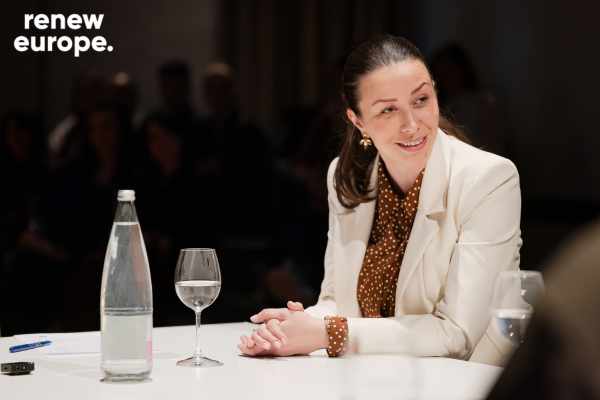
On Sunday, March 8, 2026, at the invitation of the Poliskop Center for Political Empowerment, MEP Irena Joveva participated in a discussion that took place before the performance of the play Three Sisters. The discussion offered reflection on the position of women in public space and on broader social issues through the prism of philosophy, art and culture. “The issue of women’s representation in politics does not in itself necessarily mean a better position for them. But at the same time, it is important that women occupy leading positions, because it is their presence that allows decisions to be shaped also from the perspective of the experiences, needs and interests of women in society.”
In the debate, Joveva pointed out that the European Parliament has recently reopened discussions on women’s rights, which should have been indisputable for a long time. It is increasingly obvious that some political actors are willing to question even rights that have been taken for granted for decades. According to her, such an attitude was also clearly demonstrated in the responses of some Slovenian MPs when considering the initiative for safe and accessible abortion.
She also touched on the issue of tension between the center and the periphery in Europe. As is known, she herself comes from Jesenice, from where Ljubljana was once perceived as the center of everything. Today, these differences are decreasing due to technology and greater mobility, but this does not mean that the feelings of distance from decision-making centers have completely disappeared, she explained. She also emphasized that a much bigger problem than the geographical difference itself is often how politics works. According to her, the key question is not only whether institutions work, but who they really serve:
“We adopt legislation in the European Union institutions with the aim of setting minimum standards for all people, not just for a privileged few. But a lot depends on those in the highest positions and on whether they are prepared to truly think about the most vulnerable when making decisions. This often includes people on the European periphery, who are often overlooked or left aside by political decisions.”
A special part of the discussion was also devoted to the issue of the position of women in existing social and political structures. For Joveva, many of these social structures were formed without the participation of women, so she agreed with the moderator’s assertion that it is entirely legitimate to consider whether they need to be changed and adapted to be more inclusive and better reflect the diversity of society.
“Politics is obviously doing something wrong if the world is spiraling into increasing chaos,” she stressed, citing some recent moves by US President Donald Trump as an example. She added that the issue of women’s representation in politics does not necessarily mean a better position for them:
“Have we ever wondered what would happen if a man were to head the European Commission, instead of Ursula von der Leyen, who is a woman but is still not the best president?”
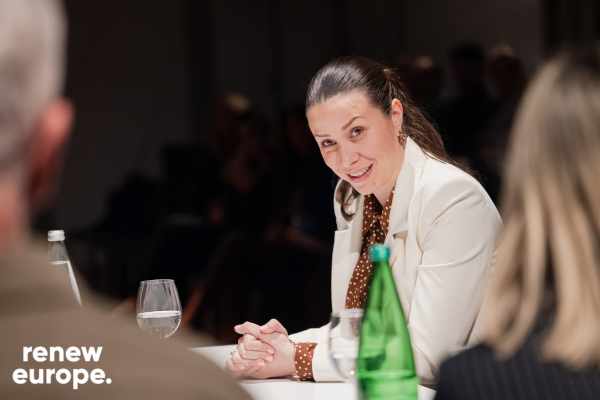
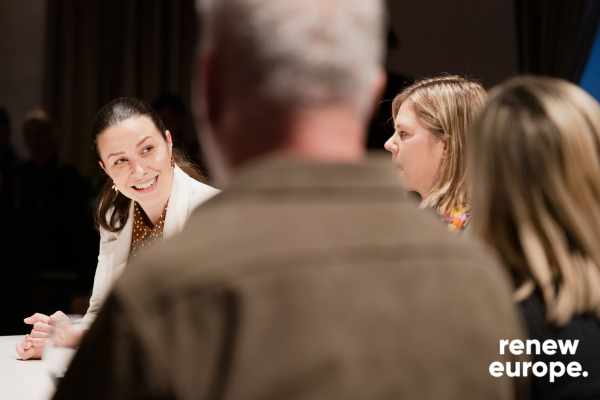
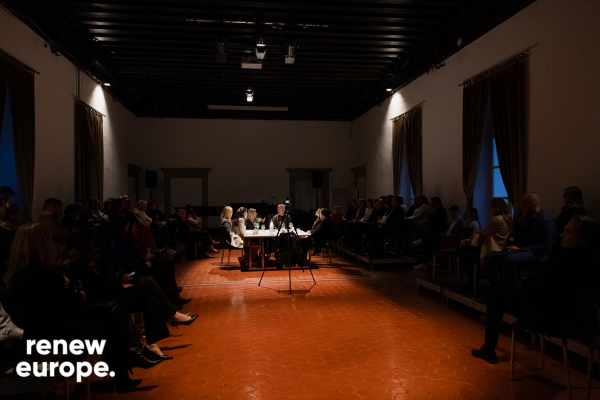
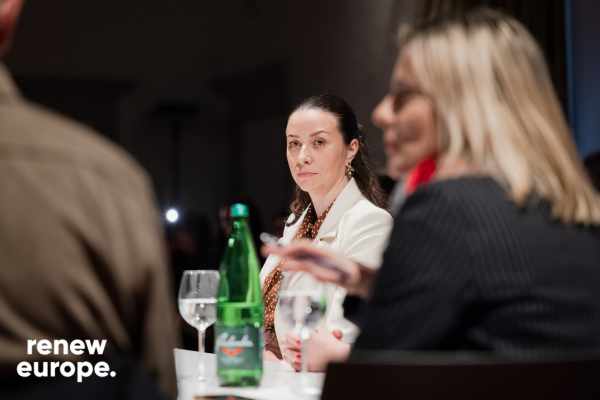
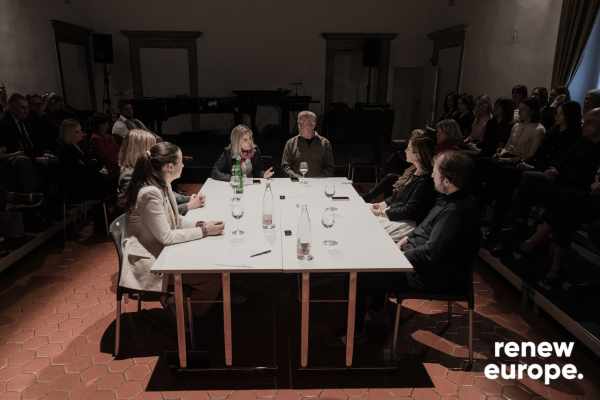
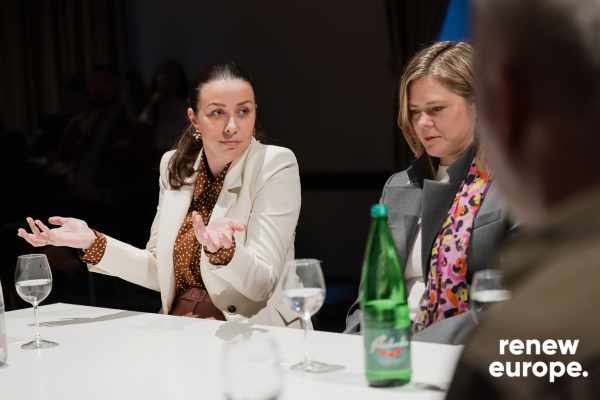
📸 Darja Štravs Tisu


Leave a Reply
Want to join the discussion?Feel free to contribute!