
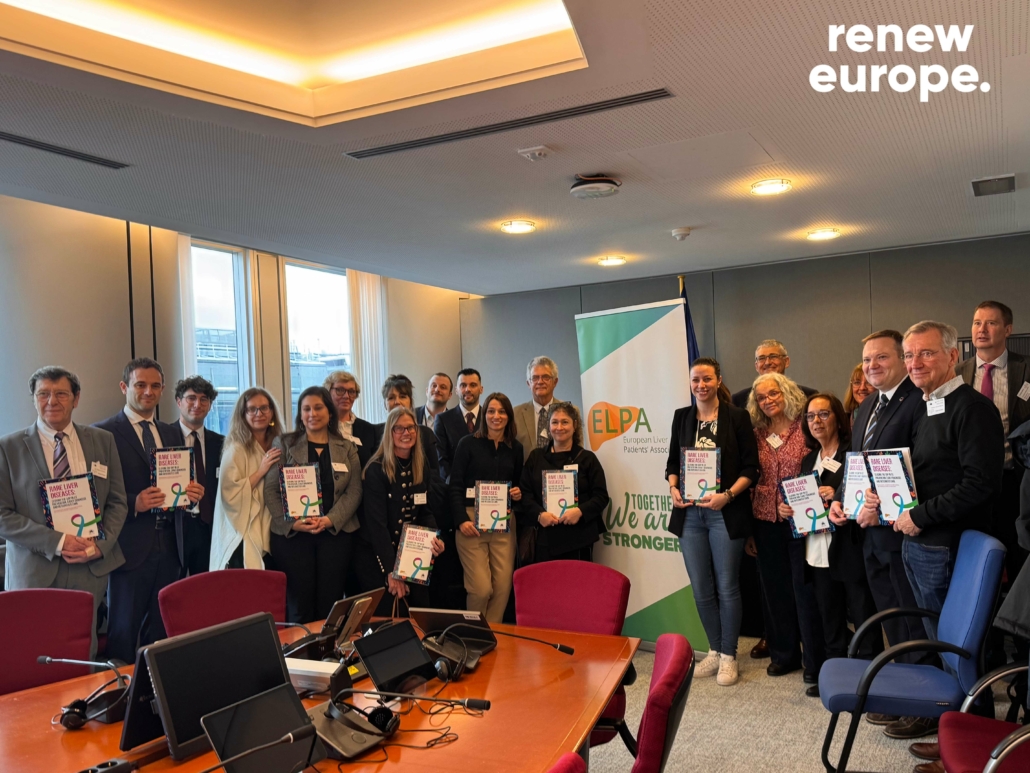
On Tuesday, 24 February 2026, MEP Irena Joveva, in collaboration with the European Association of Liver Patients, hosted a consultation dedicated to the challenges of patients with rare liver diseases and the search for systemic solutions for faster diagnosis, better access to care and more coordinated treatment across the European Union. “Rare liver diseases are rare in themselves, but the experiences that sufferers have are unfortunately common to all. The long search for the right diagnosis, uncertainty and a feeling of loneliness in healthcare systems that are not adapted to rare conditions are unfortunately a harsh reality,” said Joveva.
 Joveva began by explaining that while there is a lot of talk about rare diseases at the EU level, rare liver diseases are still too often overlooked. According to her, patients are often forced to become their own researchers and advocates, as this is the only way they can receive appropriate care.
“Behind these gaps lie real consequences for people’s lives. The progression of preventable diseases. Avoidable complications, the psychological burden on families and inequalities that depend solely on where in Europe someone lives.”

As she further explained, access to quality healthcare should not depend on where you live. No one, especially patients, should suffer a worse treatment outcome simply because professional care is geographically distant or concentrated elsewhere.

She emphasized that patients must be partners in shaping policies and systems that affect their lives. Their experiences clearly reveal where systems fail, from diagnostics to care coordination, psychological support, and navigation through complex healthcare pathways.
“Rare diseases are also a test of the fairness of our Union. They show whether our health systems work only for the majority or also for those whose conditions are complex, under-recognised and scattered across different countries.”
In conclusion, Joveva expressed her hope that similar discussions will raise awareness, improve collaboration, and ensure that patients with rare liver diseases also receive timely diagnosis, expert care, and lifelong support.

Leave a Reply
Want to join the discussion?Feel free to contribute!