
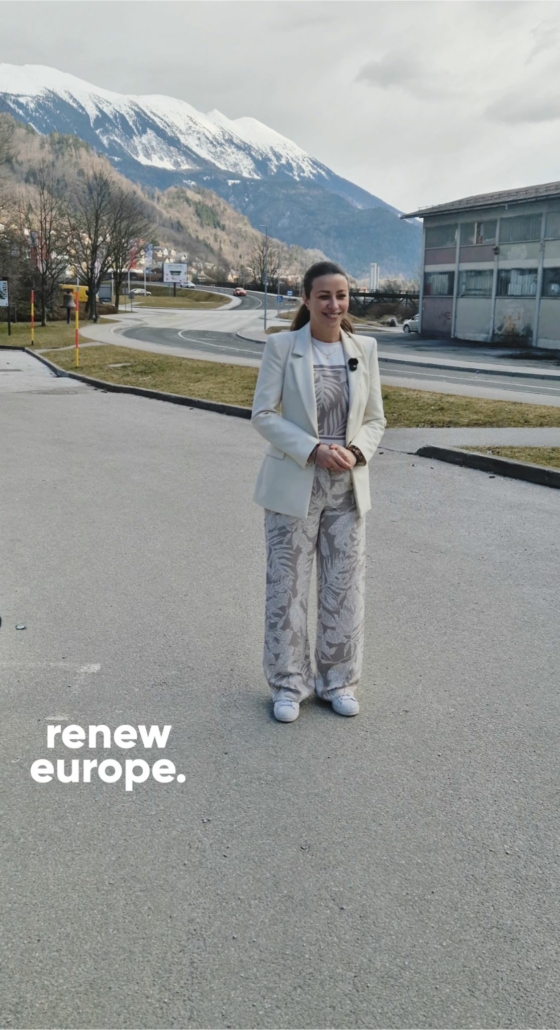
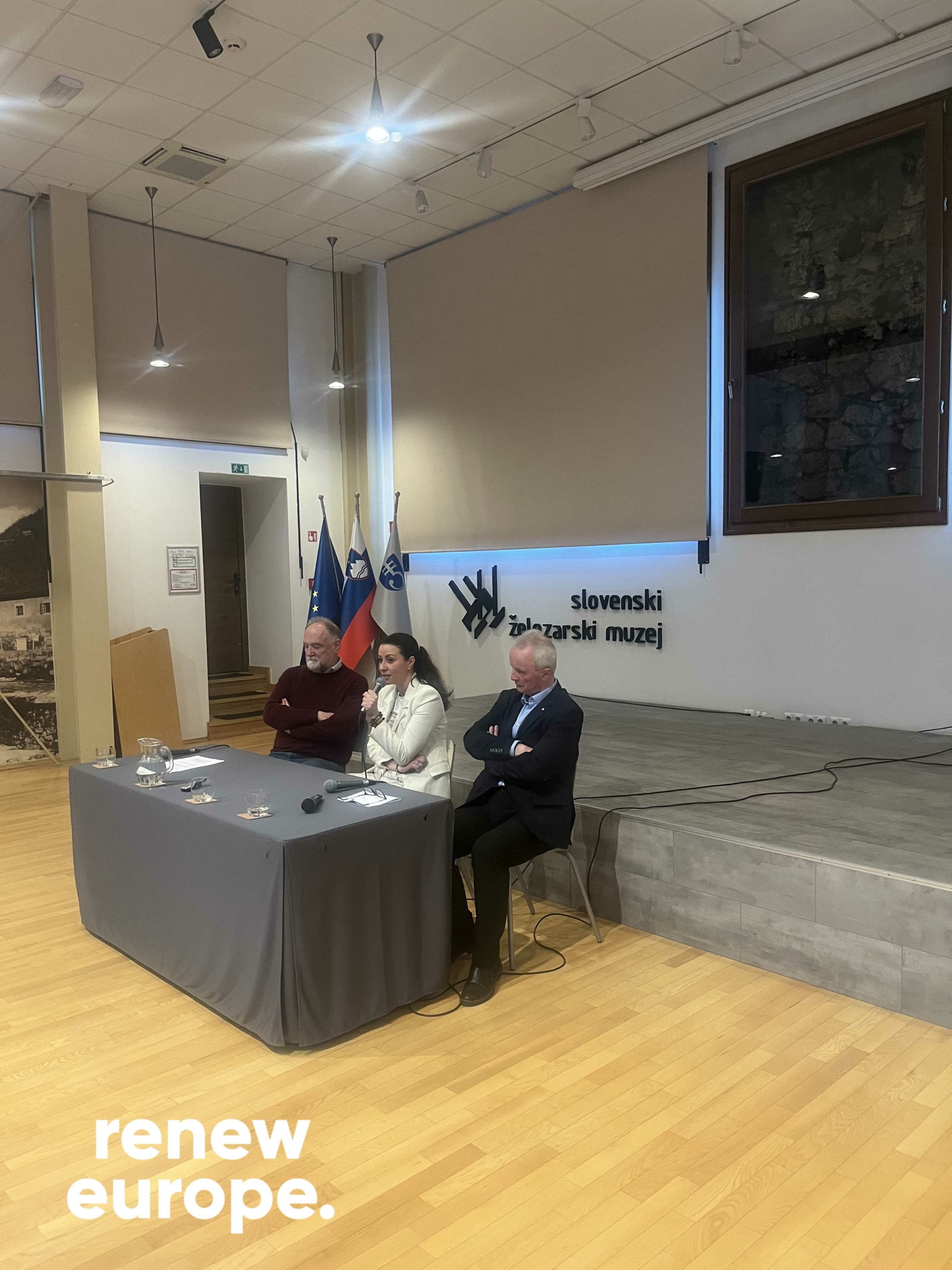
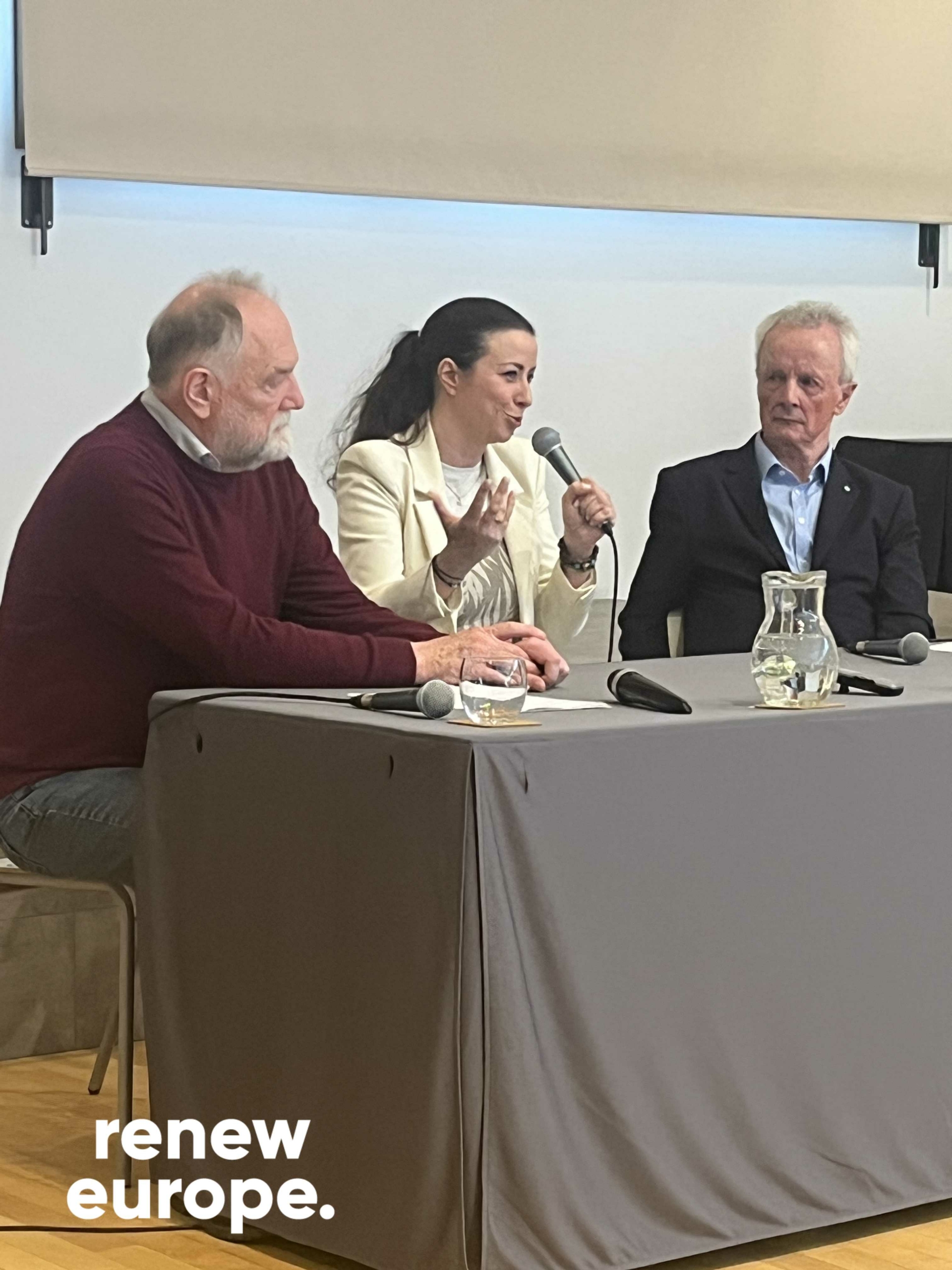
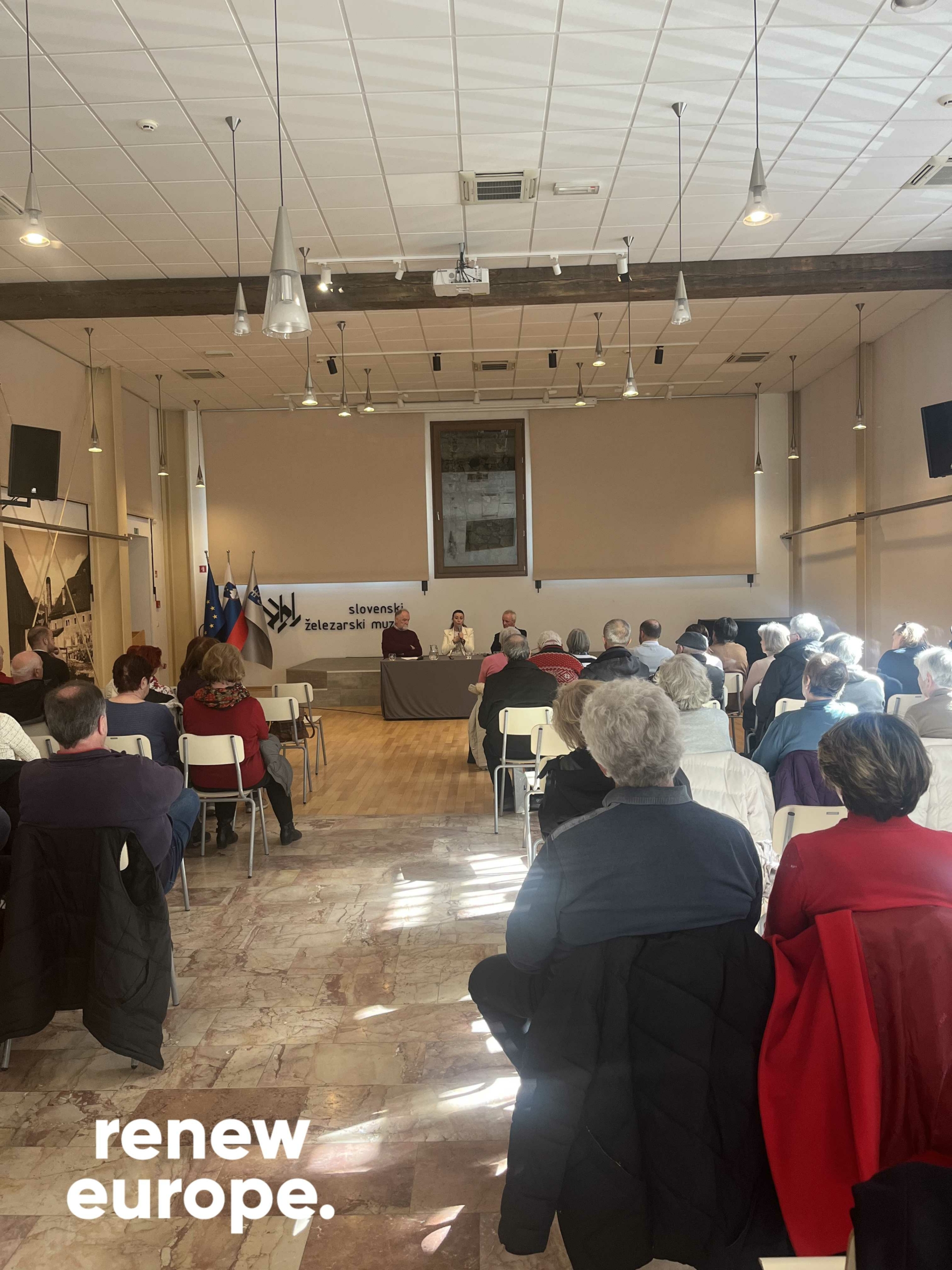
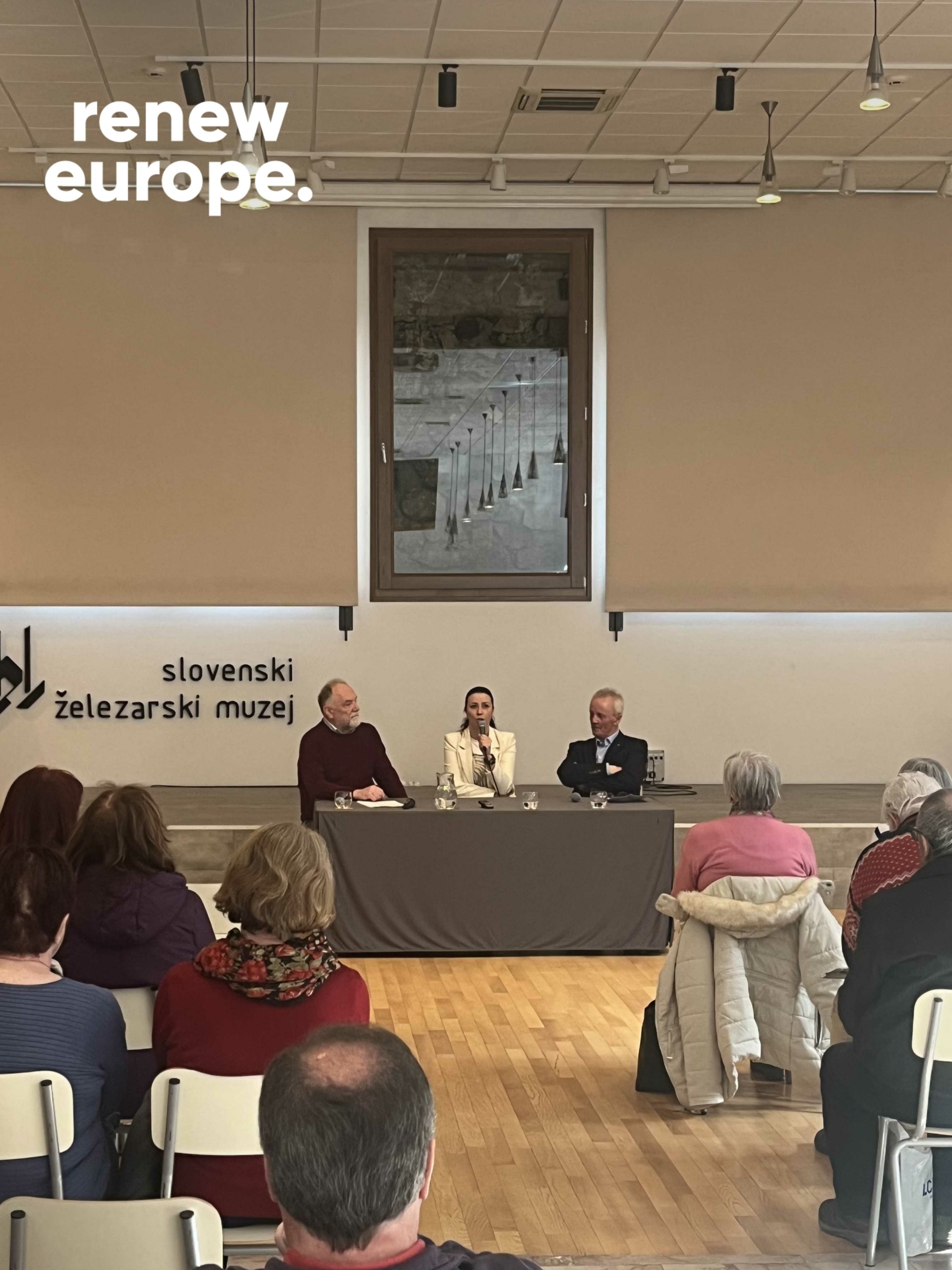
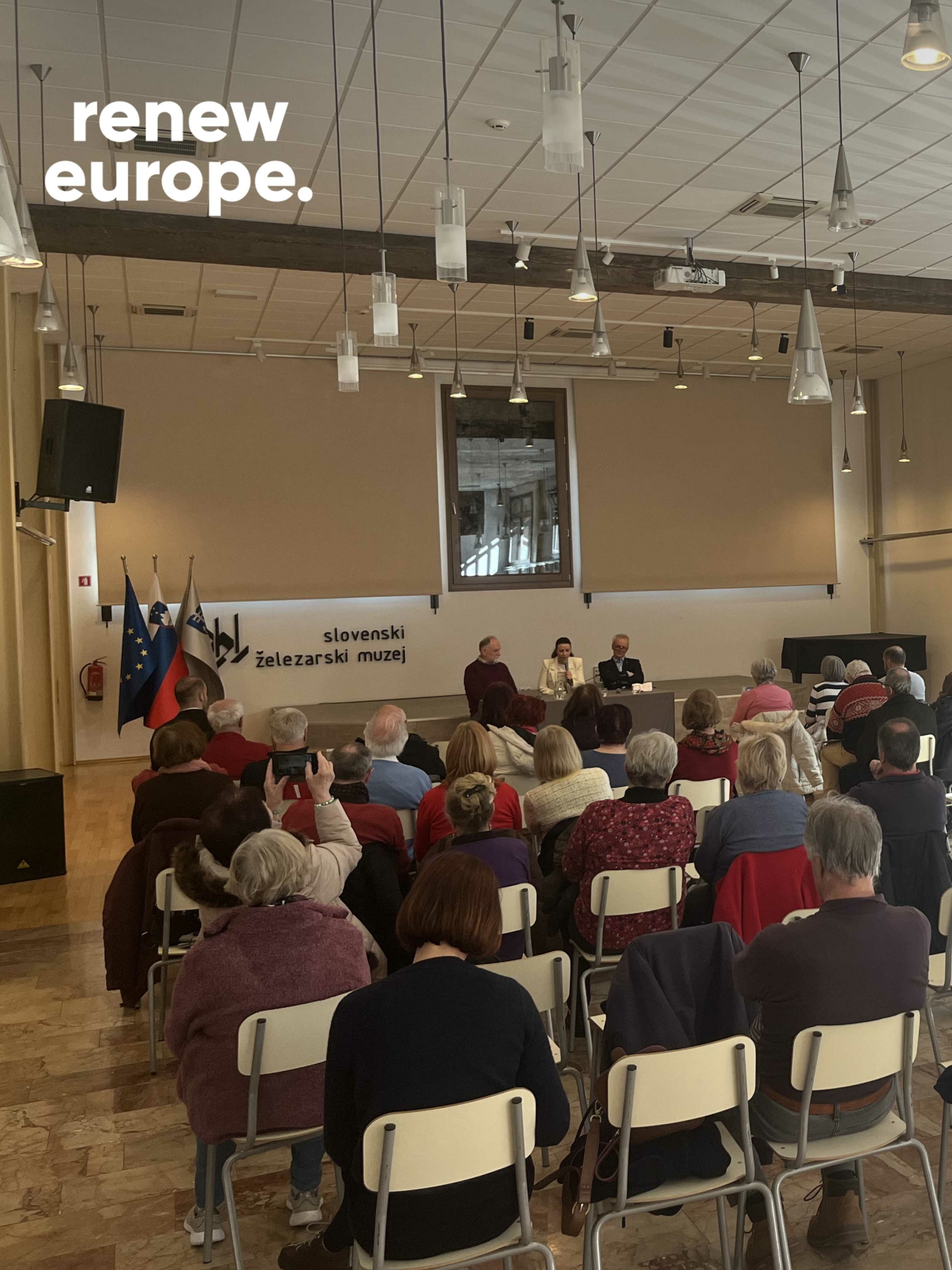
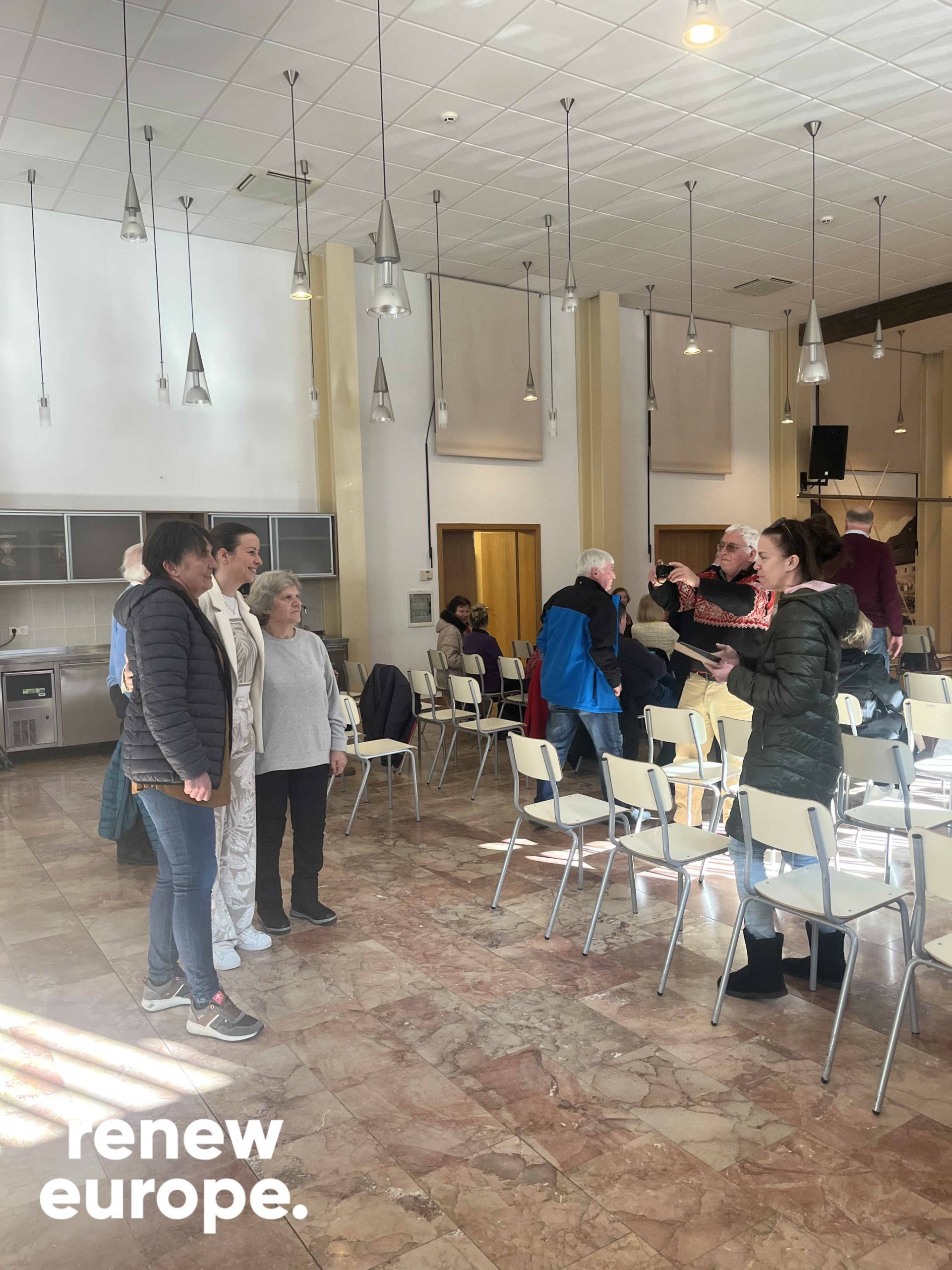
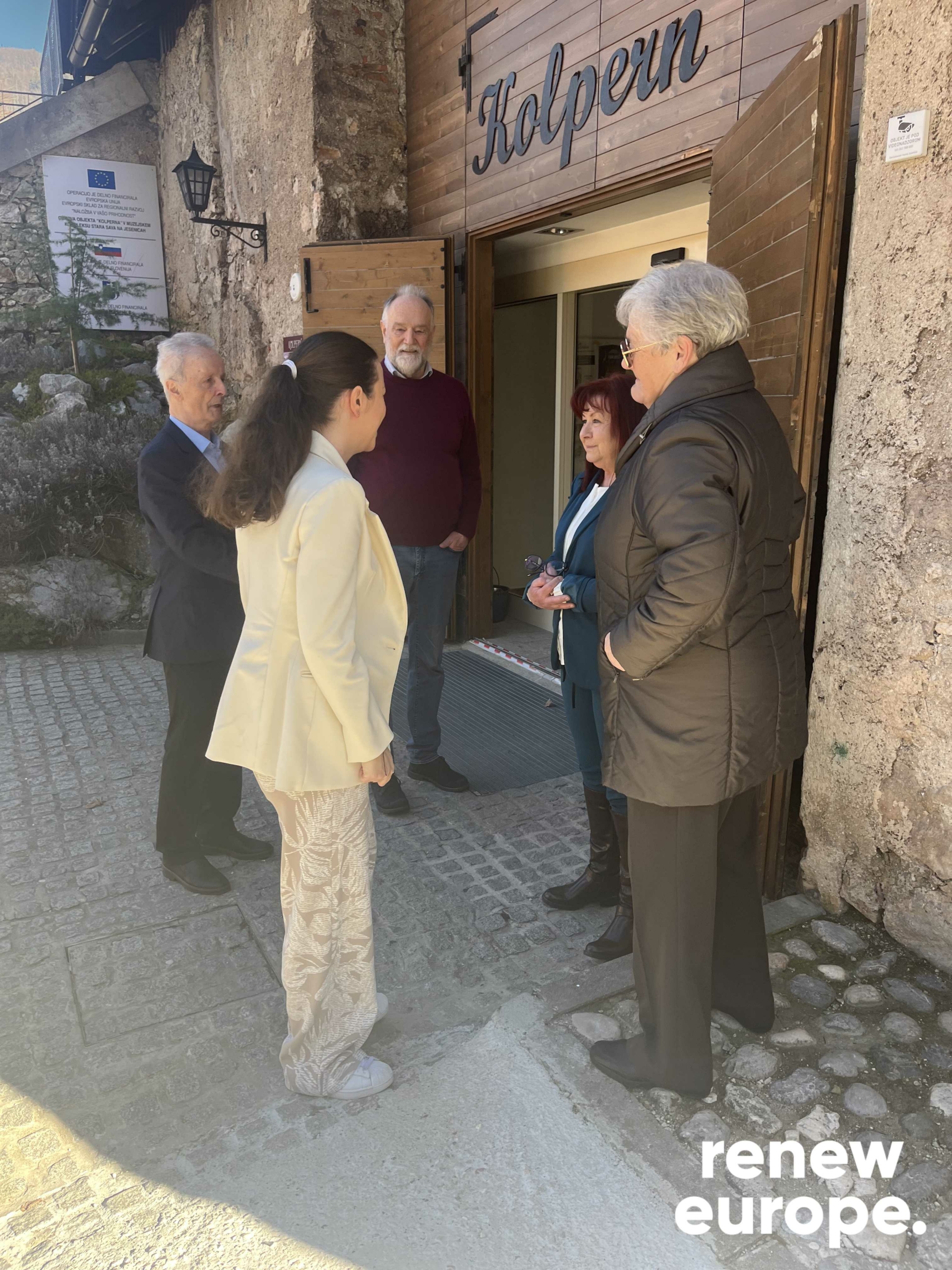
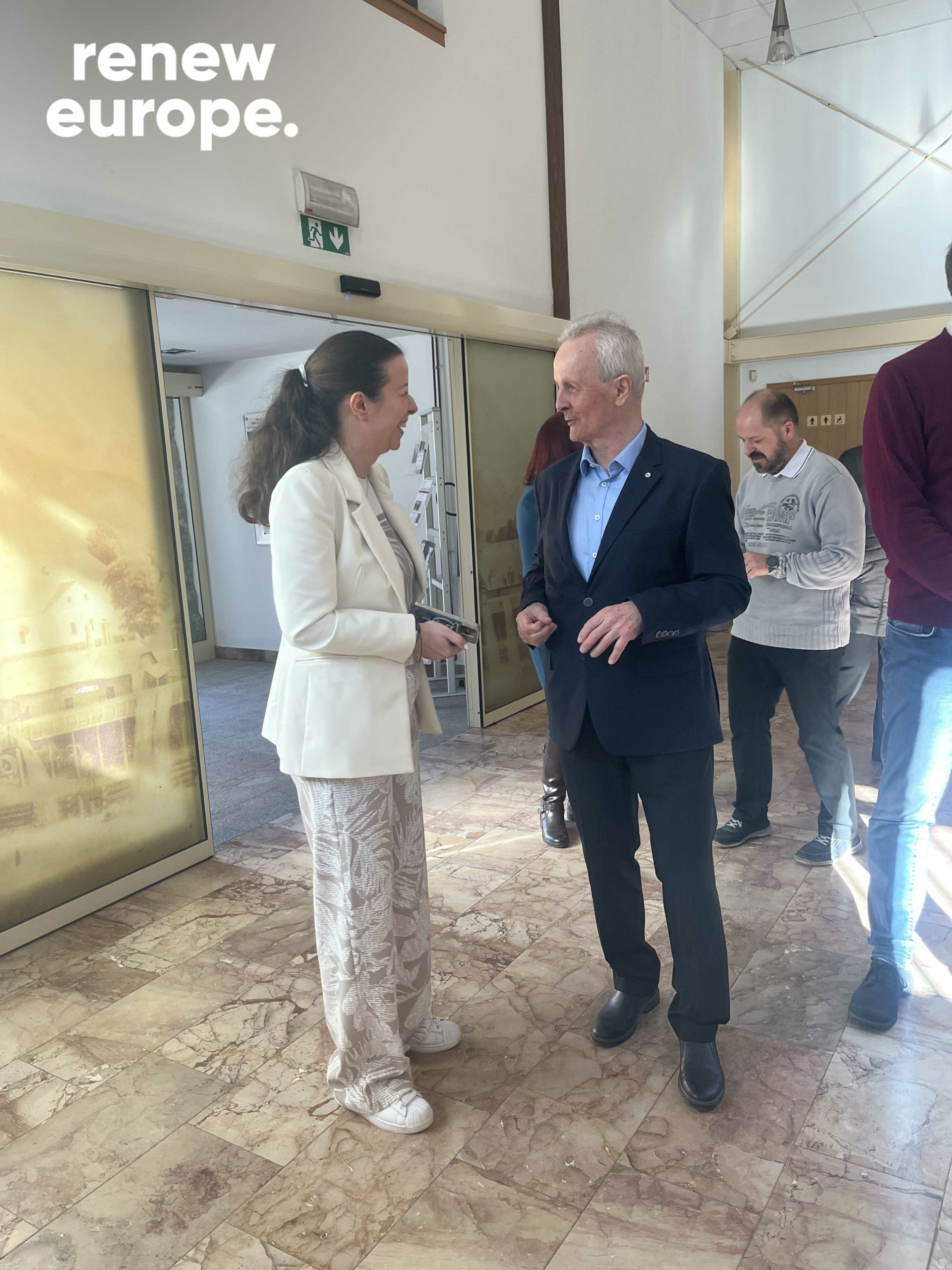
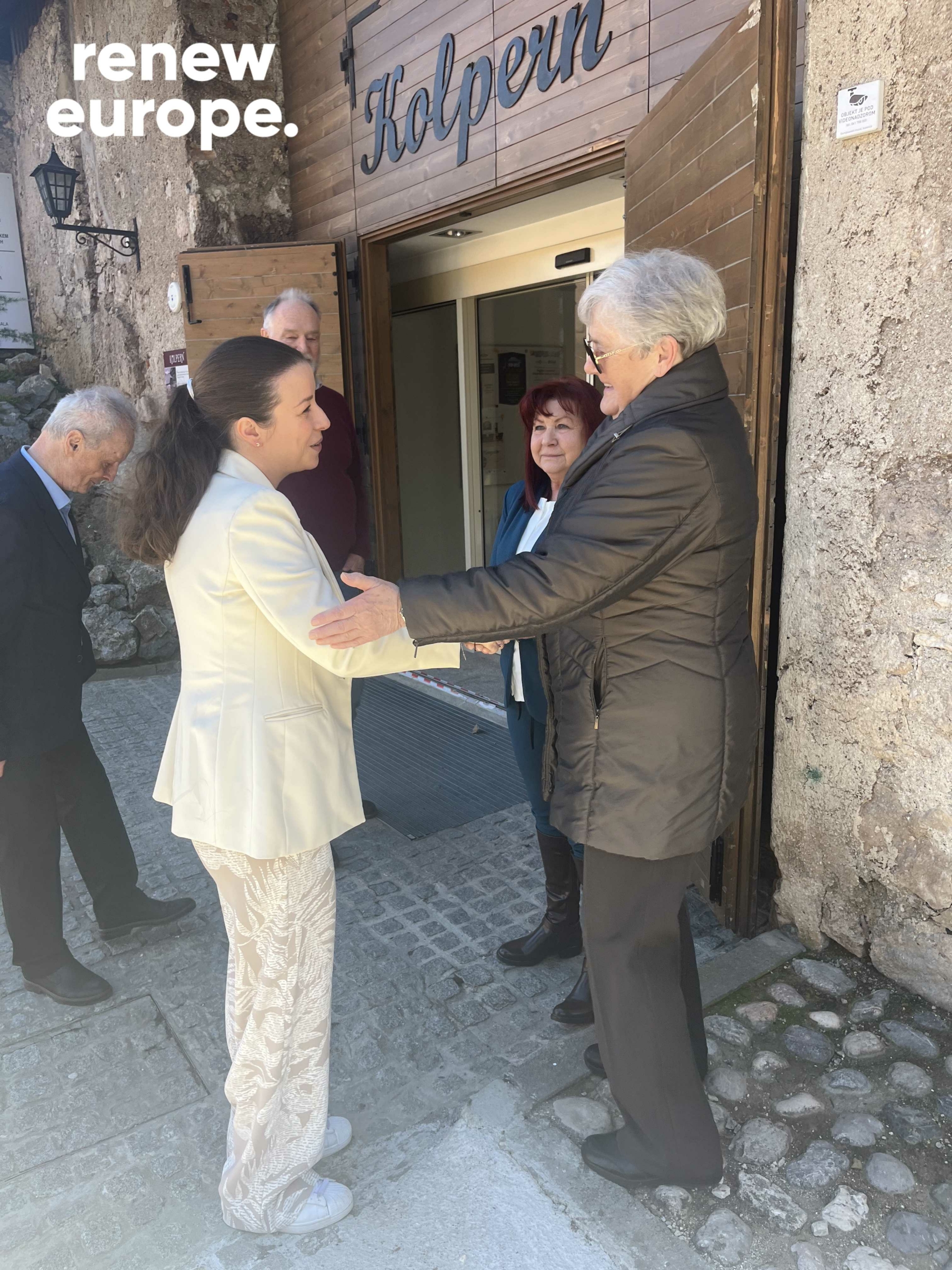
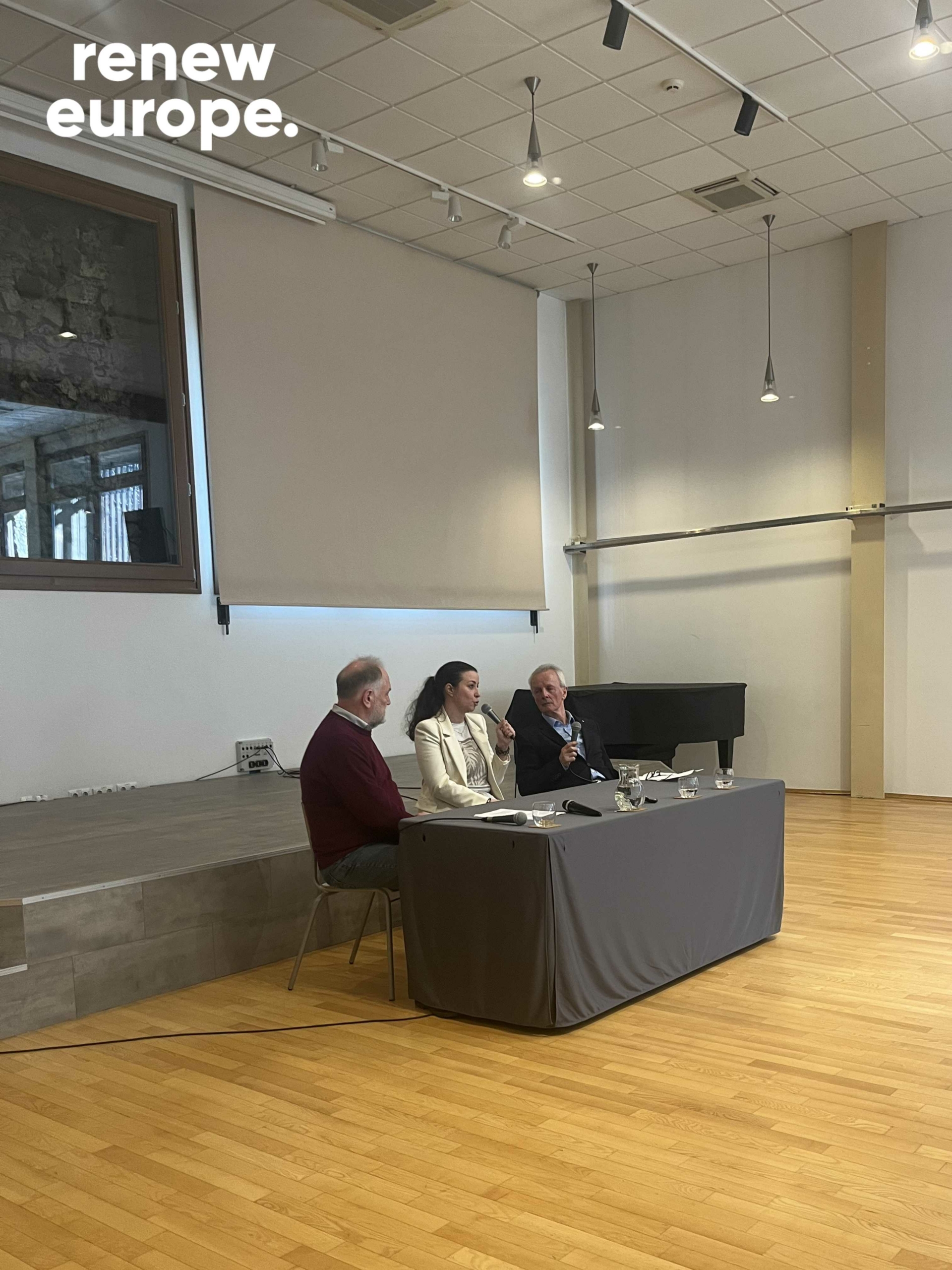
On Tuesday, February 17, 2026, at the invitation of the Pensioners’ Association, MEP Irena Joveva participated in a discussion as part of meetings with Jesenice residents who have stepped out of the average in Kolpern. ”Ljubljana is my address, Brussels is my job, and Jesenice is my home,” the MEP emphasized, among other things.
Joveva began by emphasizing that her political and personal path is still most marked by Jesenice. A place that, despite living between Ljubljana and Brussels, she still considers her true home. As she said, it is the environment she comes from that is responsible for the fact that she has never gotten “altitude sickness”.
“It is important to remain true to yourself, to not forget where you come from, and above all, because of whom you are where you are. Jesenice is still the meeting point of everything that I am, and I do not intend to change that. It is a place where different cultures intertwine, which actually also reflects the fundamental idea of the European Union, united in diversity. I like to say that I have lived this slogan since birth, just as all of you who are here today live it in your own way.”
When asked how much her journalism career shaped her for later political work, she explained that she began her journey as a student at the Slovenian Press Agency (STA), and then continued her work at POP TV in the 24h program. Eight years of journalism, she says, have given her invaluable experience in understanding the political system. As a journalist, she followed politics from the outside, but today she co-creates it from the inside, from the other side of the microphone.
“As a journalist, I quickly noticed that politicians often say a lot, but don’t answer the question. That’s why I always try to answer clearly and specifically. If I don’t know something, I admit it. I don’t think I’m the smartest person in the world, as some people like to believe about themselves, and there are many such people in politics. Well, my experience from my previous profession also helped me a lot with speeches in the plenary hall, which last about a minute. This is almost the same as a live journalistic broadcast, so from the beginning I knew how to choose the right words in a short time and clearly convey the essence.”
As she emphasized, she entered politics with the clear intention of showing that not all politicians are the same. According to her, it would be irresponsible to reject the opportunity for change and at the same time claim that nothing can be improved. Today, she participates in several committees of the European Parliament, including the Civil Liberties Committee (LIBE) and the Employment Committee (EMPL), where she has a full membership, while in the Public Health Committee she acts as a substitute member and can participate in discussions. The MEP explained that the legislative procedure in the European Union resembles the national one in its basic structure, but the European one is somewhat more complex, as it is based on a balance between three institutions. The European Commission, which acts as an approximation to the national government, has the exclusive right of legislative initiative, which means that it prepares and proposes legislative acts. They are then decided on by the European Parliament, which represents the citizens, and the Council of the European Union, in which the member states are represented.
“Our legislative work begins in the relevant parliamentary committees, where MEPs prepare amendments, and political groups appoint negotiators for individual legislative proposals. In the previous mandate, I was also a negotiator on behalf of my political group in the preparation of European media legislation.”
She explained that after the positions of the European Parliament and the Council of the EU are formulated, negotiations begin in a so-called trilogue, where the three institutions coordinate different views and seek a compromise. She added that the European Parliament often advocates more ambitious solutions, with the final legislative act only adopted when all three institutions reach a common agreement.
As a member of the liberal political group, she also highlighted the importance of independent decision-making. “Although we receive guidance from our political group, at the end of the day I always vote according to my conscience,” she said, adding that she always consults with Slovenia’s permanent representation to the EU on issues of Slovenian national interests.
When asked about the events in Gaza and the European Union’s response, she stressed that the Union responded to the war in Ukraine with a rightful unity, while such unity is lacking when it comes to the response, especially of the European Commission and the member states, to the situation in Gaza. She pointed out the presence of double standards and added that although the number of MEPs in the European Parliament who are drawing attention to this is increasing, there is still not a sufficient political majority for more decisive action.
“Although there are more and more courageous, vocal and, for me, only realistic MEPs in Parliament, we still do not have the necessary majority to call genocide genocide and respond appropriately to a humanitarian catastrophe. It is no secret that in the EU Council, individual countries often make decisions primarily based on their particular interests. Such double standards also appear in other areas, for example in the enlargement of the Union, where the Western Balkans are treated differently from Ukraine.”
The discussion then turned to the Slovenian and pan-European initiative My Voice, My Choice, which aims for safe and accessible abortion everywhere in the European Union. She stressed that the initiative does not encourage a greater number of abortions, but strives to ensure that they are carried out in a safe manner. She also pointed out the large differences between member states, where women often have difficulty accessing healthcare due to legislative restrictions or conscientious objection.
In conclusion, she answered the question of how much MEPs can contribute to representing Slovenian interests with their positions. She explained that some do indeed actively support Slovenia’s interests, while others pursue completely different goals. She warned that often the loudest are those who publicly present themselves as the only defenders of Slovenian interests, even though their actions do not reflect this. As an example of manipulative action, she highlighted the debates on the situation of farmers, where, in her opinion, these strategies were particularly evident.


Leave a Reply
Want to join the discussion?Feel free to contribute!