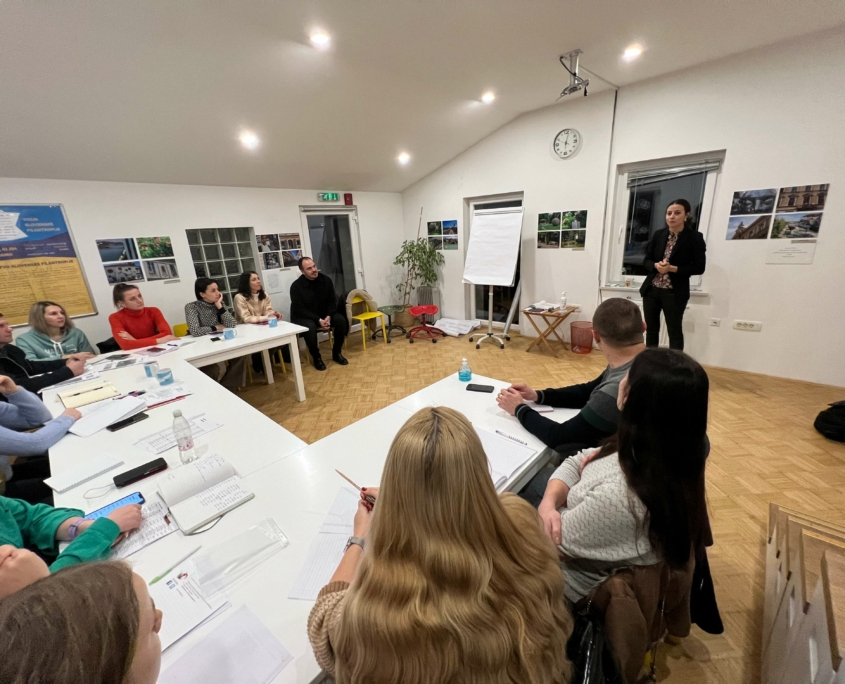
During the interactive debate on media freedom (Medijska svoboda? Bo, da!), , which was hosted by MEP Irena Joveva in early December 2022, young people discussed the upcoming European Media Freedom Act. The workshop critically discussed the current state of the media in the European Union and the measures proposed by the Act, and offered solutions for how to increase media freedom and in particular how to ensure that this legislation does not become another in a series of toothless tigers.
Young people welcome the proposed Act, because they believe that media freedom should be given greater attention as it has been neglected for too long. They think the proposal is well conceived, but too general and does not go far enough in actually addressing the most problematic issues regarding media freedom in the European Union. In the debate, they divided up into thematic groups to explain their views and propose solutions.
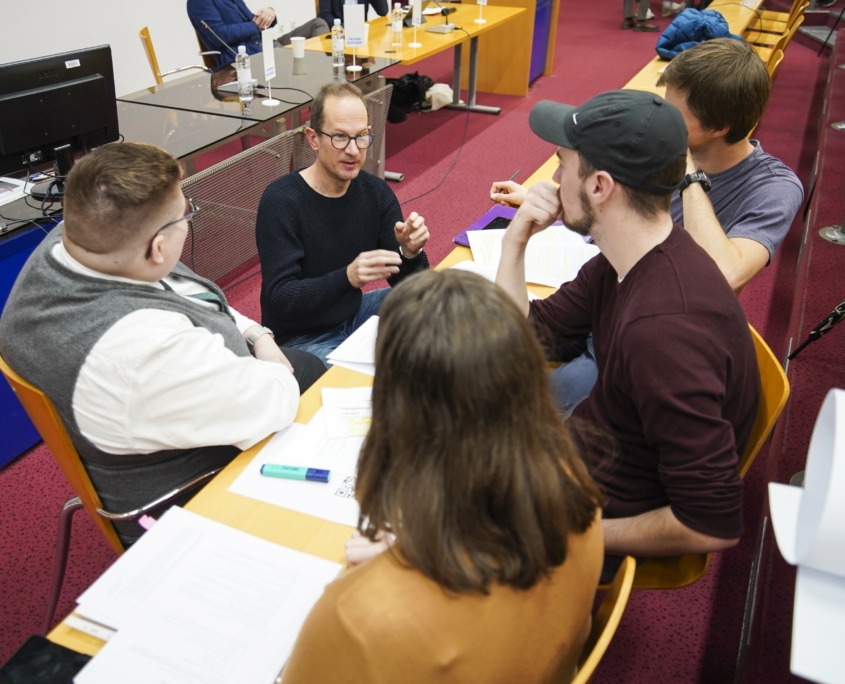 With respect to independent public service media and their pluralism, young people emphasise that building society’s trust in these media is key. They believe that the media should be independent, not least financially. They stress the importance of (self-)regulation on the basis of ethical standards developed by representative organisations working towards regulated, quality and independent journalism. In their view, the media landscape would benefit from an independent regulatory body to oversee the pluralisation and protection of media of special interest, for which criteria for state (co-)funding would need to be determined. Young people would also devote due care to online media, including in relation to foreign investment, for which they propose a publicly accessible single information system.
With respect to protecting editorial independence and transparency of media ownership, young people point to the vagueness of the Act. They propose the development of more common European norms for the appointment, dismissal and tenure of editors in public service media and to cover their running costs. They mention the possibility of trying to influence a media outlet through an ownership stake and therefore foresee the disclosure of all (in)direct media owners. The same is proposed for advertisers and their share in a media outlet’s funding.
Young people also want clearer rules on viewership and state advertising, including an obligation for the European Commission to issue guidelines. They advocate that national regulatory authorities should help to draw up guidelines on viewership methodology and that the methodologies and the rating themselves be publicly available (including in digital form). Young people propose abandoning the concept of territorial entities of one million inhabitants, as it is too broad for smaller countries such as Slovenia, and add the importance of local authorities and municipalities. As regards state advertising, they advocate transparency and more precise instructions for state-controlled entities.
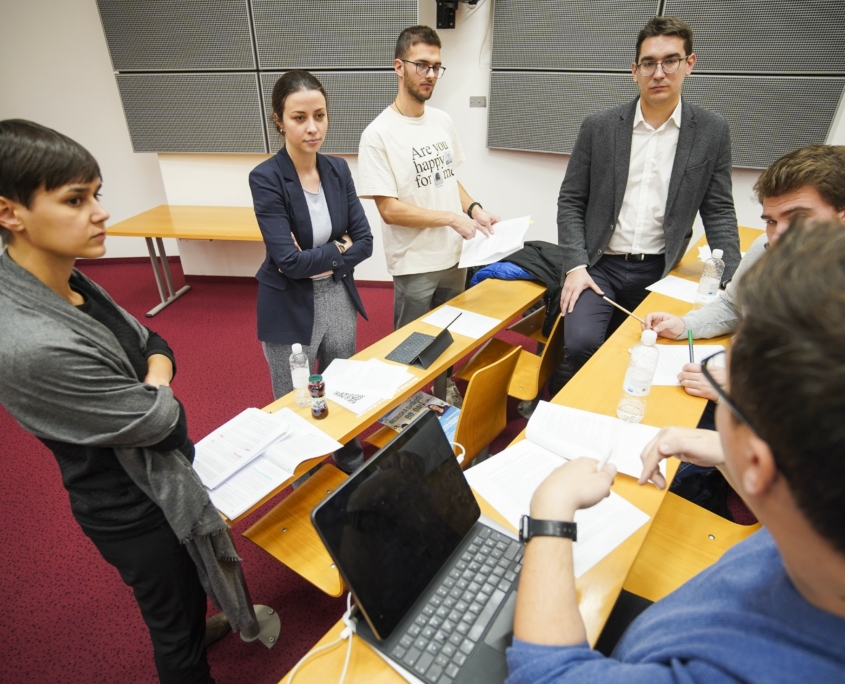
They also press for the protection of online content and appropriate media services in the digital environment. In their view this area relies too much on national legislation and there is not enough communication between platforms and national institutions, for which they propose a direct channel of communication between the big platforms and the competent authorities. They mention the under-staffing of existing online safety bodies and poor definition of self-regulation. They thus propose the creation of basic national norms across Member States, with their own independent bodies, on the basis of which minimum common European standards would be drawn up (as a bottom-up approach). They also mention minimum standards for journalists and online media, with independent bodies stripping those who would abuse their status as journalists or media of their verification/vetting. Rather than punishing offenders, young people see the solution in stimulating compliance with the code of ethics and (self-)regulation through state subsidies. The same should apply to non-digital media. An additional solution would be to design strict rules requiring a clear declaration in the headline as to whether the piece is an opinion or news. For the latter, the criteria for compliance would be stricter.
 With respect to the currently envisaged regulatory body at the European level, the European Board for Media Services young people propose certain mechanisms to ensure that the Committee is not a toothless tiger and that Member States actually follow the rules laid down in the Act. They suggest that the Committee could report an offending country to the European Commission, which could then take the Member State to the Court of Justice of the EU. When appointing representatives to the Committee, they stress that they should be selected without influence from the ruling parties, but, say, by representative organisations. As regards the national regulatory authority, young people also point to the lack of leverage; they propose powers similar to those of the Competition Protection Agency. They also propose a single media inspection service covering the entire media sector. Furthermore, they point to the importance of a precise definition of terms, as this will determine what power and leverage these bodies will really have.
The young people concluded their reasoning with the thought that even if this Act is expected only to set a framework for media freedom, it will have to be as defined, robust and ambitious as possible. You can read more about young people’s views and ideas on the European Media Freedom Act here.
A shorter video of the event can be found here.
The interactive workshop was preceded by a panel discussion with MEP Joveva, Asta Vrečko, Minister of Culture, Lenart J. Kučić, Media Adviser to the Minister, and Marko Milosavljević, professor at the Faculty of Social Sciences. They presented their views on media freedom and its current state and, of course, discussed the current draft of the Act. You can read more here.
The European Media Freedom Act (EMFA):
EMFA is a proposal from the European Commission containing a new set of rules to protect media pluralism and independence in the EU, aimed at strengthening the internal media market so that media – public and private – can operate more easily across borders in the EU internal market, without undue pressure and taking into account the digital transformation of the media landscape. The text of the Act will shortly be taken up by the European Parliament and the Council.

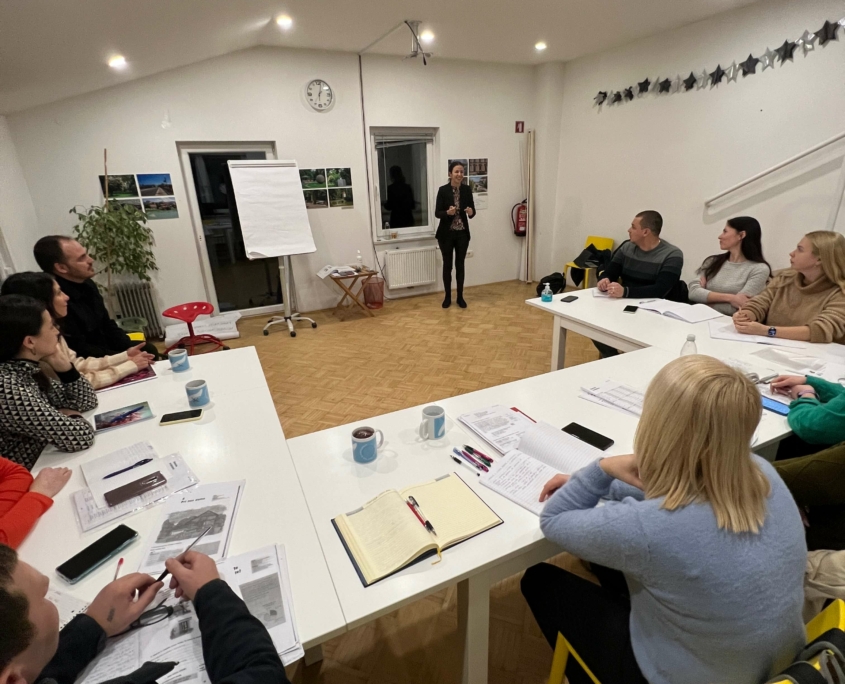 The course was very interactive, and the way it is run is that everyone converses in Slovenian from the very start.